Warsaw palace reconstruction concept wins at the 2024 International Architecture Awards
A concept to reconstruct Warsaw’s Saski Palace (also Saxon Palace), the Brühl Palace and the townhouses on Królewska Street has won an award at the 2024 International Architecture Awards. The design by WXCA Group was selected from more than 850 entries and named a winner in the Restoration/Renovation category.
Saski Palace reconstruction concept wins award
Established in 2004, the International Architecture Awards are organised by The Chicago Athenaeum: Museum of Architecture and Design, the European Centre for Architecture, Art, Design and Urban Studies, and Metropolitan Arts Press Ltd. The programme recognises outstanding projects by leading architects and urban planners. This year, more than 150 projects received awards across 27 categories, ranging from commercial buildings and community centres to exhibition centres, government buildings, and sports and recreation facilities. In the Restoration/Renovation category, a four-member jury, including architectural critics and designers, commended WXCA’s proposal to restore the western frontage of Piłsudski Square to its pre–Second World War external appearance. The project team included Szczepan Wroński, Andrzej Bulanda, Małgorzata Dembowska, Krzysztof Moskała, Piotr Hardt, Zuzanna Wodowska, Maja Przewoźnik, Jakub Chlebowicz, Michał Czerwiński, Agnieszka Roś, Nina Wojtczuk-Hejduk and Maciej Wiewiór. The awards ceremony took place in Athens on 21 September 2024.
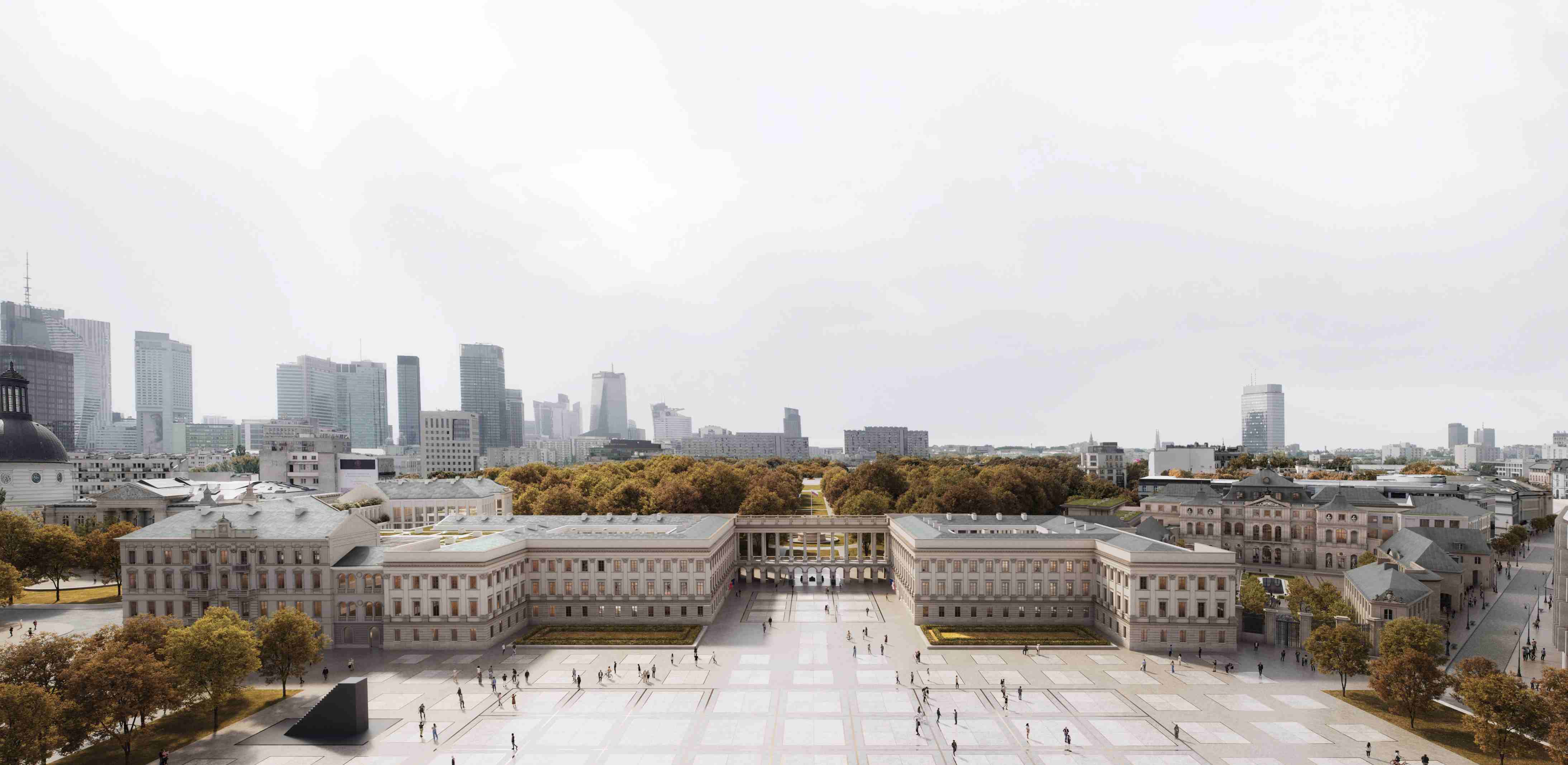
An architectural story of the western frontage of Piłsudski Square
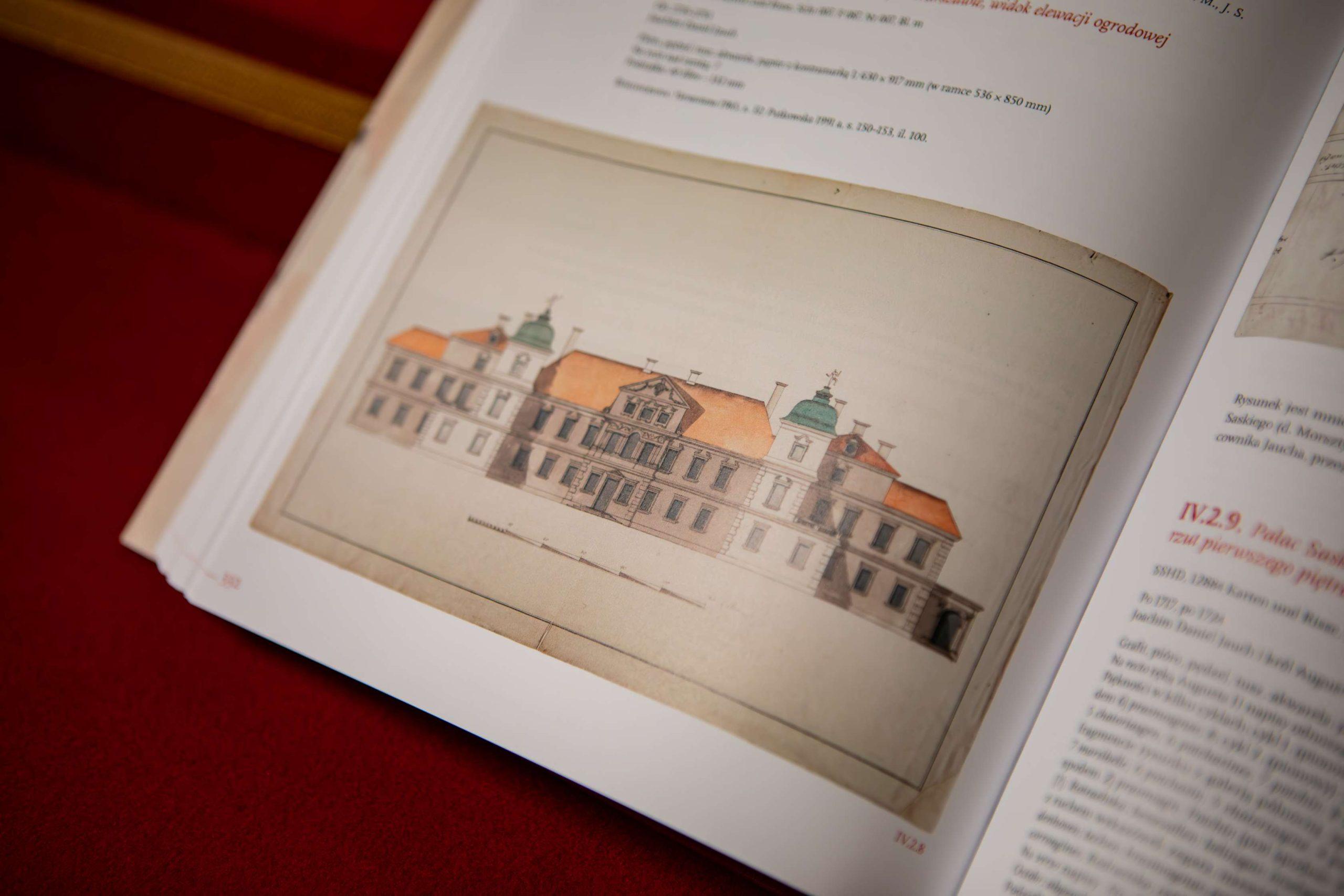
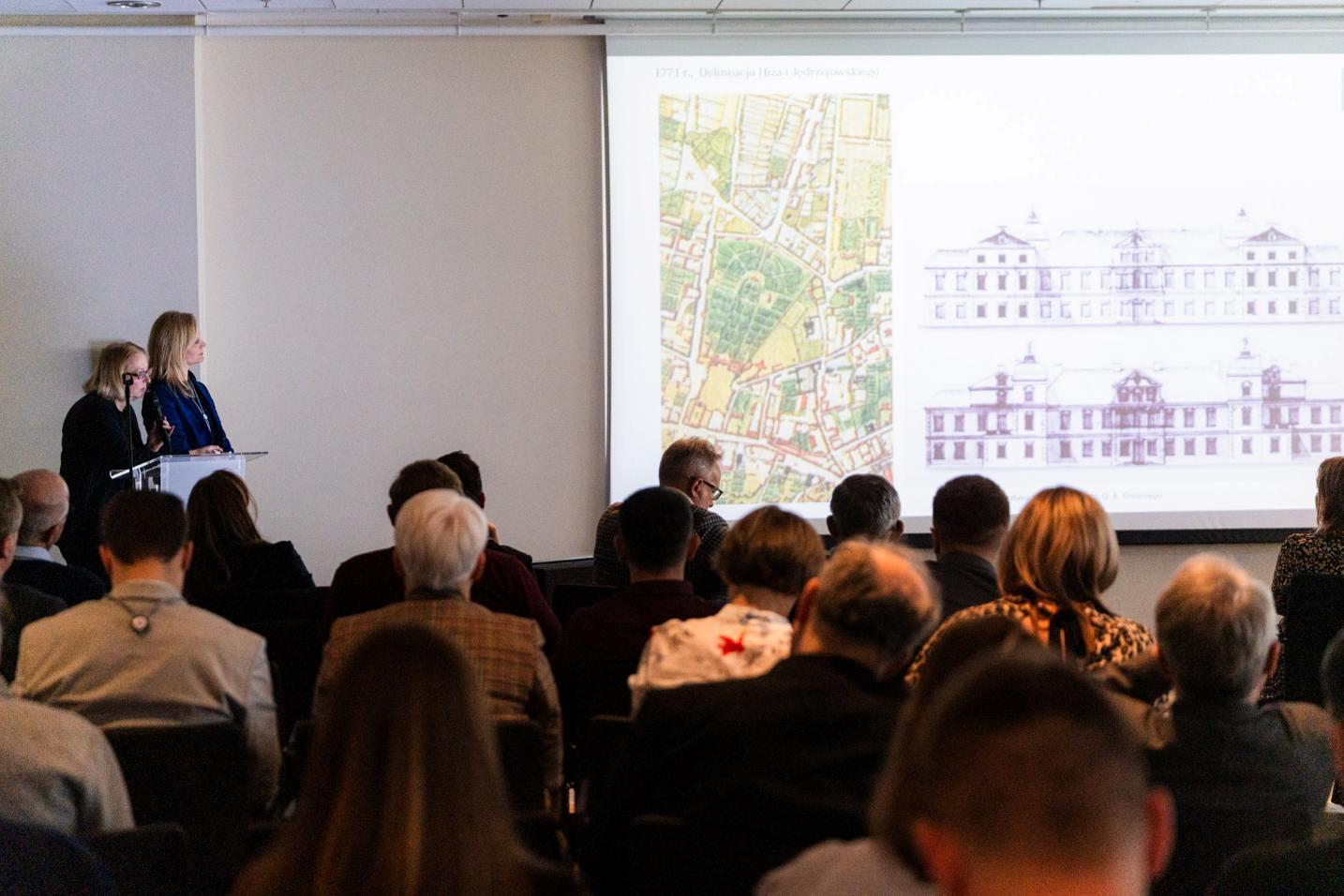
The reconstruction of the Saski and Brühl Palace complex, along with three townhouses on Królewska Street in Warsaw, is based on an Act passed by the Sejm and Senate on 11 August 2021 (Journal of Laws of 2024, item 578). The Act provides for the restoration of the buildings’ external appearance as it was on the eve of the Second World War. As the architects at WXCA Group note, ‘the intention of the reconstruction (…) is to restore the landscape of pre-war Warsaw, which lives on in the public imagination but was lost in brutal fashion’. In preparing the architectural concept, the designers set out to recreate the buildings' appearance as faithfully as possible, retaining the original wall thicknesses, the tectonics of the façades and traditional finishing materials. At the same time, they recognised that the exterior as it stood on 31 August 1939, while an essential starting point, is only one reference – in effect a single still frame – in the long history of this part of the capital. This area has undergone numerous transformations – from changes of status and ownership to architectural alterations – as well as unrealised plans for the spatial development of what is now Piłsudski Square. Accordingly, developing the reconstruction concept also required reconstructing the site's history, which unfolds as ‘a series or process of events and transformations – a dynamic conception of architecture as a story rather than merely as matter’. As a result, the WXCA Group architects propose that the reconstruction continue this story and allow history to resume its course, while taking into account present and future needs.
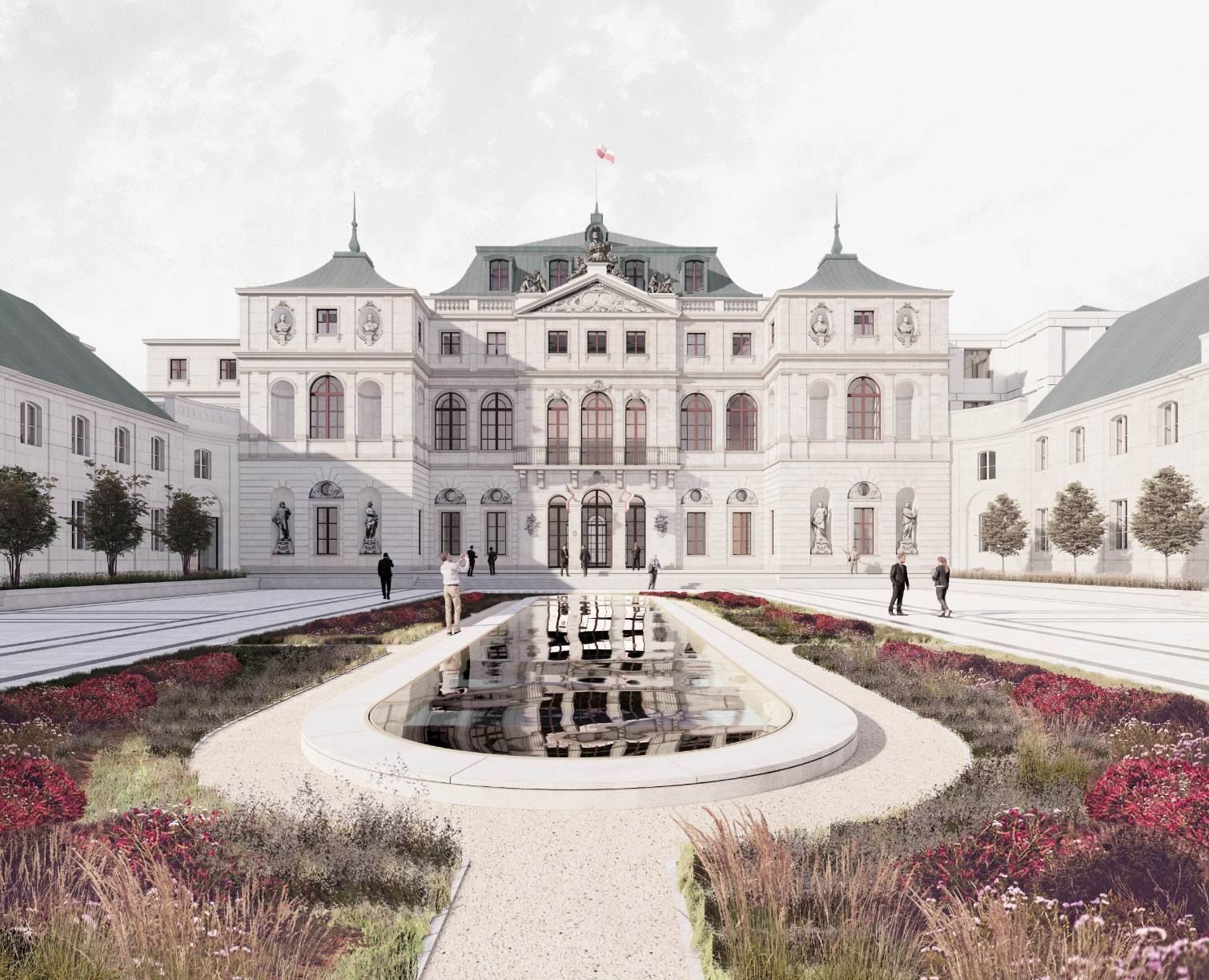
How was the concept for reconstructing the Saxon Palace chosen?
The architectural concept for reconstructing the Saxon Palace, together with the adjacent buildings and the design of their immediate surroundings, was selected through an international architectural and urban planning competition, the results of which were announced on 12 October 2023; the winning proposal was by the team later recognised at the International Architecture Awards. The competition was organised by the Pałac Saski company, set up to prepare and deliver the reconstruction, and run by the Association of Polish Architects (SARP). The WXCA Group concept won the competition, which comprised two main stages – concept studies and competition submissions – preceded by pre-qualification. The anonymised submissions were assessed by a twelve-member competition jury comprising distinguished architects, representatives of the national and Warsaw municipal authorities, heritage conservation bodies, and the art world. The competition notice was published in the Official Journal of the European Union (TED), allowing overseas architectural practices to participate.
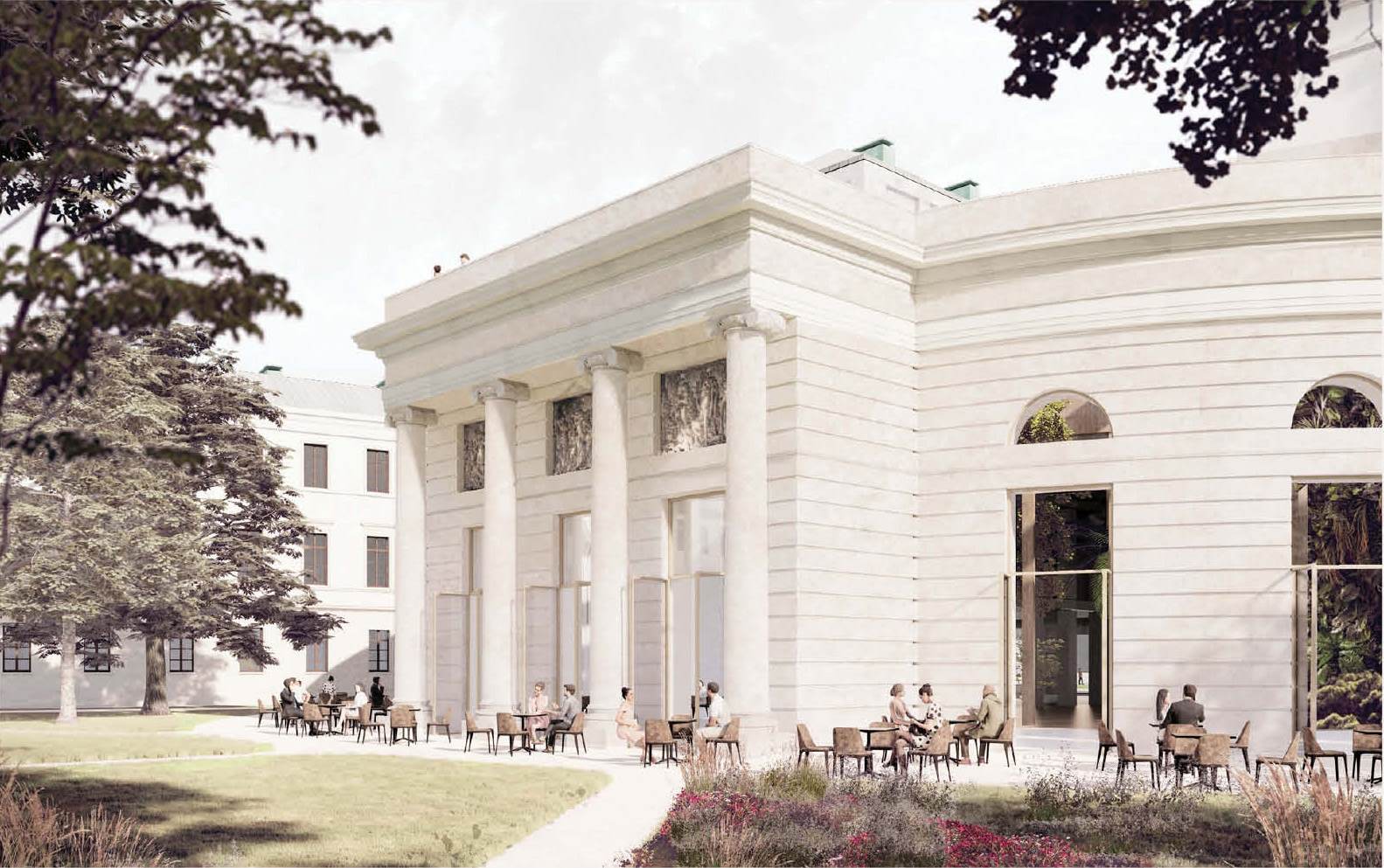
WXCA Group architectural studio
The award for the concept to reconstruct the building complex in Piłsudski Square in Warsaw is not the only accolade that WXCA Group has received in recent months. For example, the Polish History Museum building was a finalist for the ‘Polityka’ Architectural Award and was included in the 2024 Prix Versailles list of the most beautiful museums. Meanwhile, the Polish Army Museum won the 2024 Architectural Award of the Mayor of Warsaw.