About the project
History
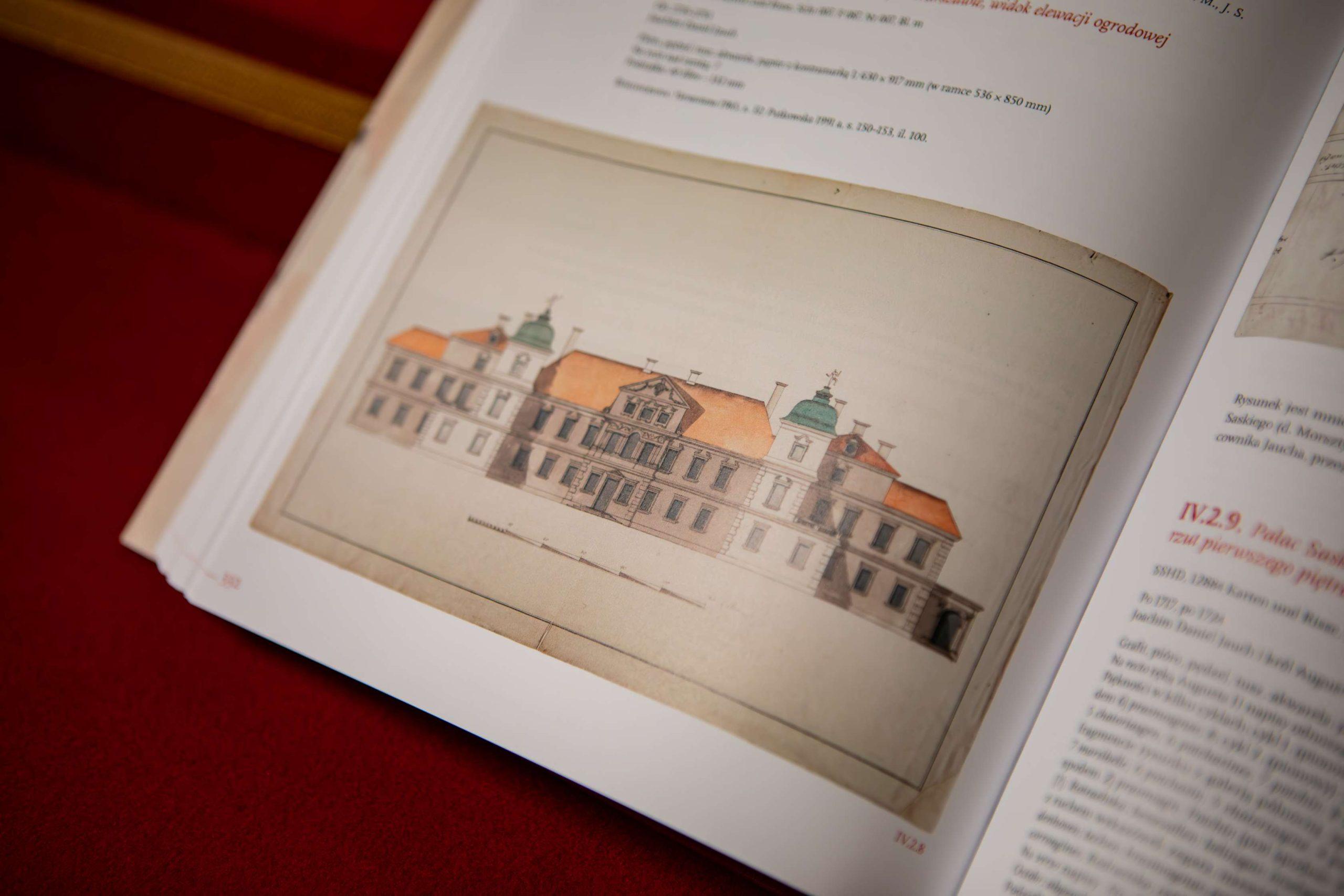
The process of reconstructing the Saski Palace, the Brühl Palace and the townhouses at 6, 8 and 10/12 Królewska Street aims at rebuilding the structures in their form from August 1939. A unique location which was bustling with life for nearly 300 years will soon regain its well-deserved location on the map of Warsaw.
It was here that some of the most important institutions of the Second Polish Republic were situated: the General Staff of the Polish Army was housed at the Saski Palace, and the Ministry of Foreign Affairs was located at the Brühl Palace.
The Saski Palace was the site of the "battle of minds" securing the future of the freshly reborn Polish state - officers and cryptologists responsible for breaking the Red Army's ciphers worked here, directly contributing to the Battle of Warsaw victory in 1920. A decade later, another impossible task was undertaken within the walls of the Palace - this time the task was to break the "Enigma" cipher. This specific campaign was initiated by prominent mathematicians: Marian Rejewski, Jerzy Różycki and Henryk Zygalski. In the last days of December 1932, they succeeded and broke the code used by the German encryption machine.
Many important figures in our history are associated with the Saski Palace. One of them is Frederic Chopin, who lived with his family in the right wing of the building until 1817. It was here that his musical genius manifested itself - he composed his first works here: Polonaise in B-flat major and Polonaise in G minor.
The adjacent Brühl Palace was a gem of Warsaw's Rococo architecture. The building is inextricably linked with the history of diplomacy of the Second Republic of Poland, as it housed the country’s Ministry of Foreign Affairs. The 1920s and 1930s saw the thriving of Polish applied arts. The Palace, rebuilt under the direction of architect Bohdan Pniewski, became the hallmark of that era. Other Polish diplomatic missions also followed suit, soon becoming venues that played an important role in promoting Polish design.
Reconstruction of the buildings that formed, before 1939, the western frontage of Piłsudski Square, is equally important from the point of vie of urban planning. The entire palace complex - the largest in Warsaw - formed a visual and scenic whole, complementing the city’s square. Its restoration will finally conclude the process of postwar reconstruction of Poland’s capital city.
Time schedule
2018
On November 11, 2018, while celebrating the 100th anniversary of Poland's independence, Polish President Andrzej Duda inaugurates the restoration of the Saski Palace, presenting a declaration on restoring the Saski Palace which is considered to be a lasting monument to independence and a symbol of continuity of Poland’s statehood.
2019 - 2020
The work of a working team, made up of representatives of the Chancellery of the President of the Republic of Poland, the Chancellery of the Senate of the Republic of Poland, the Ministry of Culture and National Heritage, the Mazovian Voivodeship Office, the City of Warsaw and the Saski 2018 Association, commences. The team aims do adopt a framework agreement on restoring the Saski Palace, the Brühl Palace and the townhouses on Królewska Street.
2021
The ceremony of signing the Act on Preparing for Reconstruction and Reconstructing the Saski Palace, the Brühl Palace and Townhouses on Królewska Street in Warsaw by the President of the Republic of Poland is held on August 15, 2021.
A special-purpose vehicle responsible for the reconstruction of the Saski Palace, the Brühl Palace and the townhouses on Królewska Street in Warsaw is established by the Minister of Culture and National Heritage on December 1, 2021.
2022
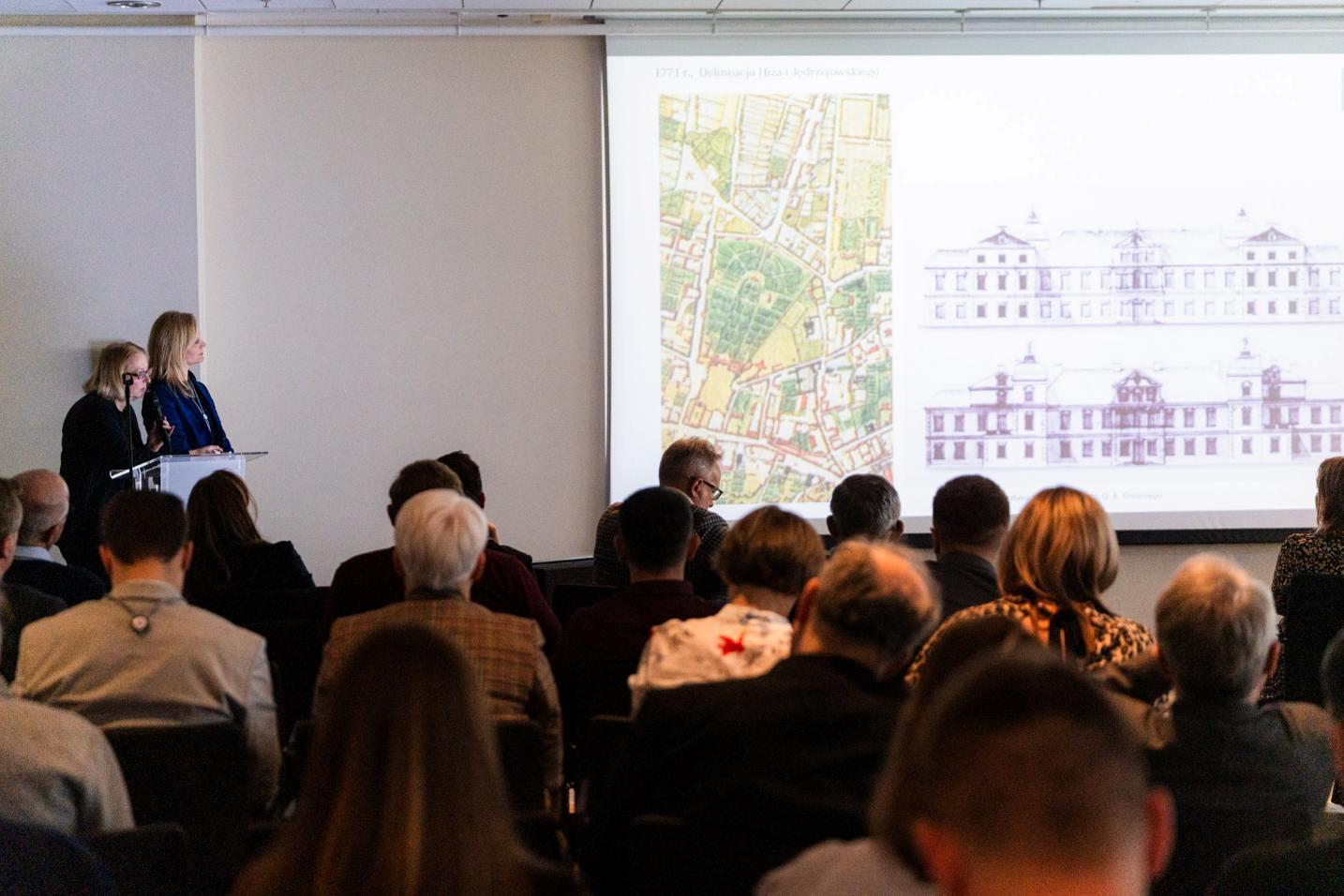
The project’s time schedule is drawn up, the process of searching historic archives, conducting geophysical, dendrological, petrographic and other surveys, as well as re-exposing the remnants of the Saski Palace commences.
2023
A competition for the development of an architectural and landscaping concept concerned with the reconstruction of buildings on the western frontage of Piłsudski Square: the Brühl Palace, the Saski Palace and townhouses along Królewska Street is announced on March 27, 2023.
Archaeological work on the Brühl Palace site begins on July 4, 2023.
Results of the competition for the development of an architectural and landscaping concept concerned with the reconstruction of the Saski Palace, the Brühl Palace and townhouses on Królewska Street in Warsaw are announced on October 12, 2023.
2025
Selection of the General Contractor.
2030
Commissioning of the edifices of the Saski Palace, the Brühl Palace and townhouses located along Królewska Street.
Preparatory work
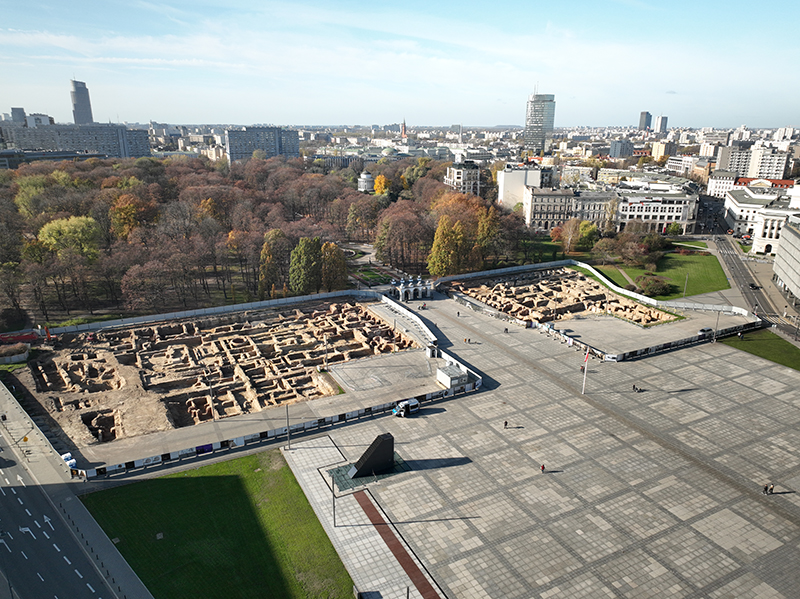
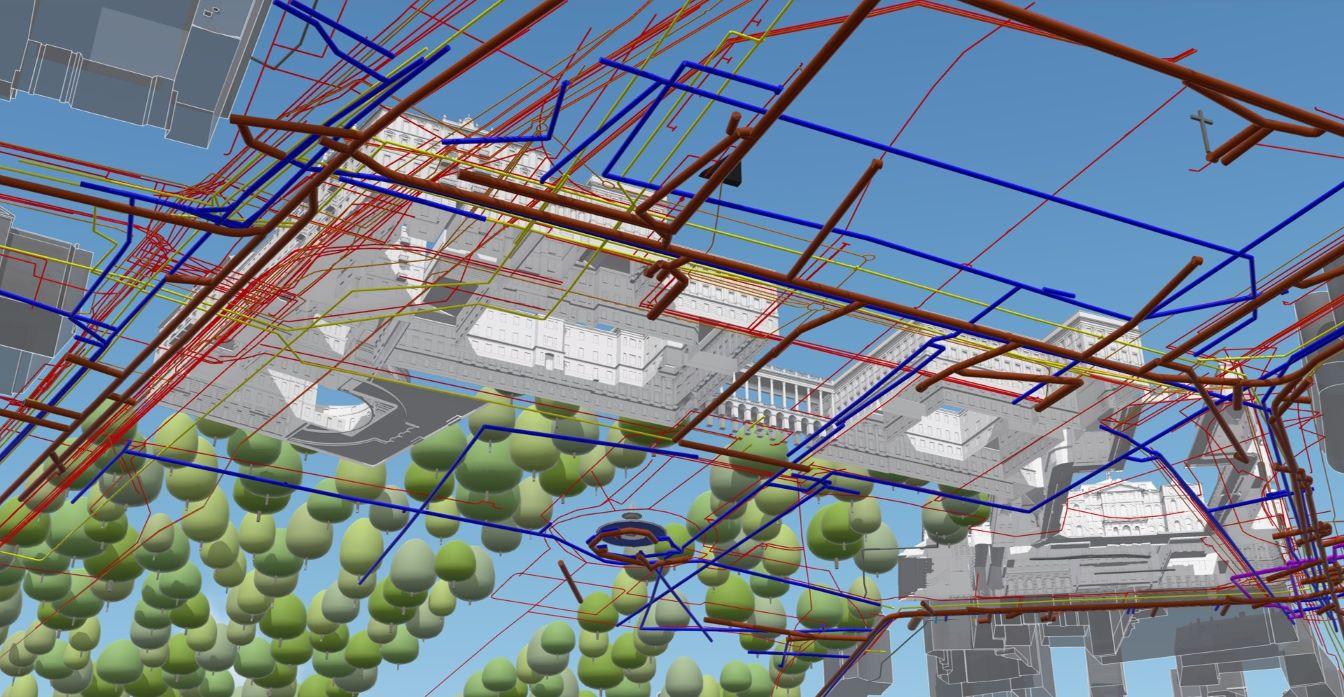
In the first months of the operation of the special-purpose vehicle known under the name of Pałac Saski sp. z o.o., a detailed time schedule for the entire undertaking was prepared, allowing to obtain the administrative decisions required and enabling to conclude agreements and lease contracts with entities managing real estate on which work related to the reconstruction of the western frontage of Marshal J. Piłsudski Square will be performed. In August 2022, a portion of the area was fenced off and work focusing on uncovering the buried remnants of the Saski Palace commenced. The fully exposed historic walls can be viewed through peepholes in the fence around the site. Work programs have also been developed to uncover the remains of the Brühl Palace and the townhouses along Królewska Street. Additional archaeological work is planned as well. A temporary connection to the power grid has been established, an ad hoc connection with the city sewer system has been secured as well to avoid stagnant rainwater and snowmelt in the archaeological pit, and a temporary traffic organization has been introduced on Królewska and Wierzbowa Streets.
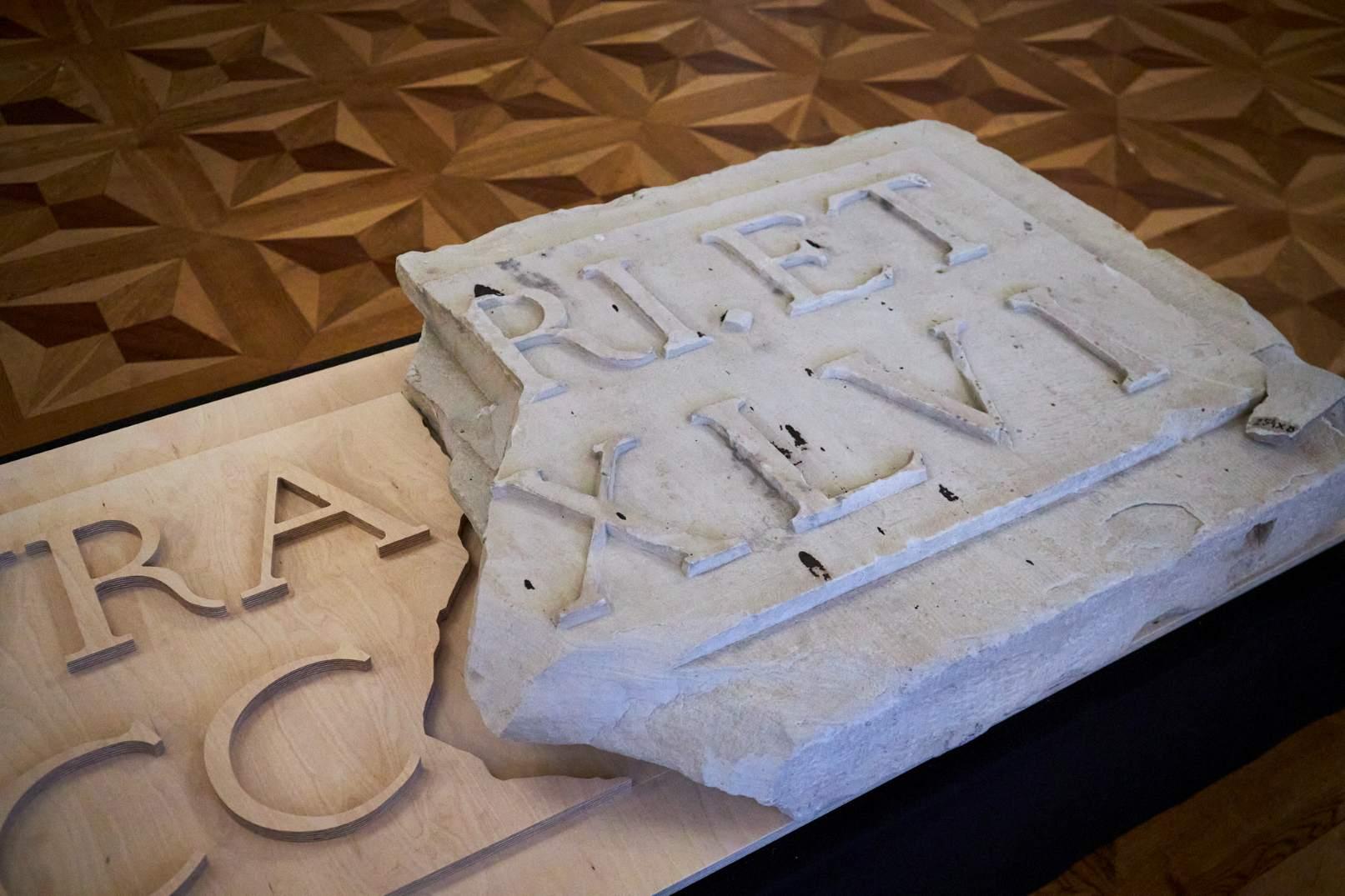
While working on the project, the company respects the natural environmental and pays great attention even to the smallest of details concerned with the restoration of historic buildings. It has established cooperation with a number of universities and institutions, such as the Warsaw Agricultural University, University of Warsaw, Academy of Fine Arts in Warsaw, Warsaw University of Technology, Nicolaus Copernicus University in Toruń and the Museum of the Earth of the National Academy of Sciences. The joint efforts have resulted, inter alia, in preparing dendrological and arborist surveys concerned with the Saski Garden, petrographic surveys of the bases of the columns surrounding the Tomb of the Unknown Soldier, and geophysical surveys.
Planned functions of the reconstructed edifices
The project focuses on reconstructing the Saski Palace, the Brühl Palace and three townhouses along Królewska Street in Warsaw. According to the provisions of the Act of August 11, 2021 on Preparing for Reconstruction and Reconstructing the Saski Palace, the Brühl Palace and Townhouses on Królewska Street in Warsaw, the reconstructed edifices will be used by the Chancellery of the Senate of the Republic of Poland, the Mazovian Provincial Office and institutions conducting cultural and socially useful activities. The Saski Palace will bring the Polish history, traditions and culture to life. It will also serve as a venue for exchanging views and ideas, as well as for holding numerous educational and cultural events. The restored buildings will be new hallmarks of the city and will be open to the general public.
Form of the Tomb of the Unknown Soldier
A special monument to honor the heroes who died while defending our homeland nearly 100 years ago was originally located in the arcade of the Saxon Palace. On November 2, 1925, the remains of the Unknown Soldier, symbolically commemorating all those who fought for the freedom of the Republic of Poland, were buried there. Only a short fragment of the central arcade with a portion of that monument survived the demolition of the Saxon Palace in December 1944. After the war, the monument was reconstructed in the form of a permanent ruin. This meaningful symbol will be preserved and highlighted in the rebuilt colonnade of the Saxon Palace, and the Tomb of the Unknown Soldier will regain its original shape.