298th anniversary of the Saxon Garden
The last day of May saw the largest Saxon Garden Festival to date. Nearly 80,000 Warsaw residents and visitors took part in the fourth edition of the all‑day retro event, whose 2025 programme was expanded with contributions from new partners. As a result, alongside musicians, interwar‑period re‑enactors, enthusiasts of penny‑farthings and automobiles, and virtual‑reality specialists, participants could enjoy special offerings prepared by the Intelligence Agency, the Polish History Museum, the Frederic Chopin Institute, the Lublin Military Orchestra, and the Jewish Theatre. The event’s traditional finale – the intergenerational dance by the pond – was accompanied by a historic moment. For the first time in nearly a century, balloons returned to Piłsudski Square, gliding above its paved surface with festival‑goers on board.
Colourful parades in the Saxon Garden
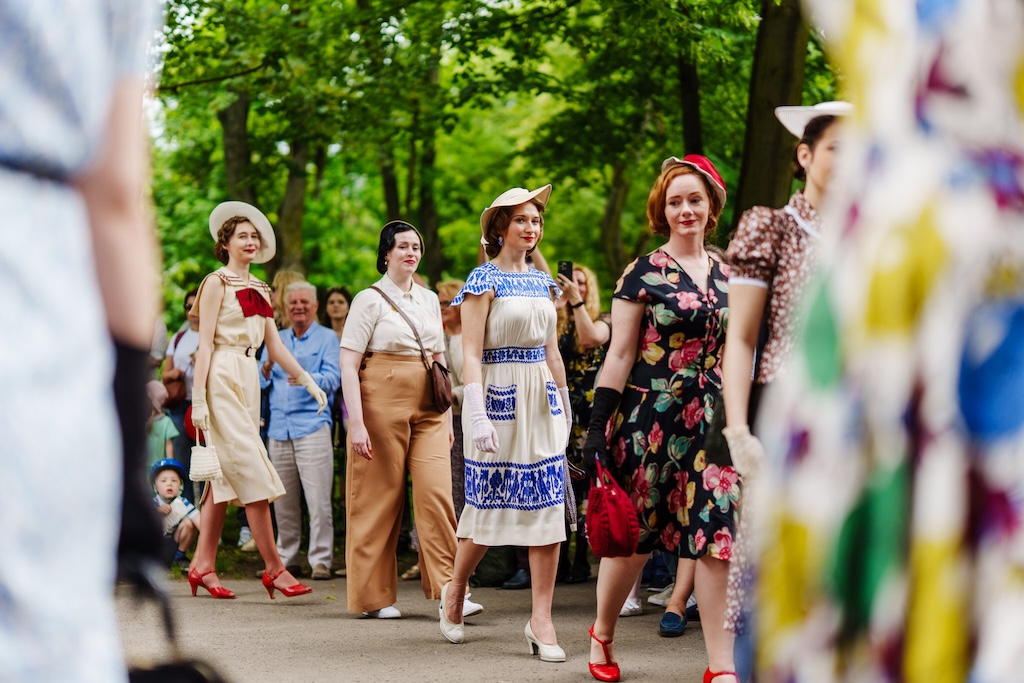
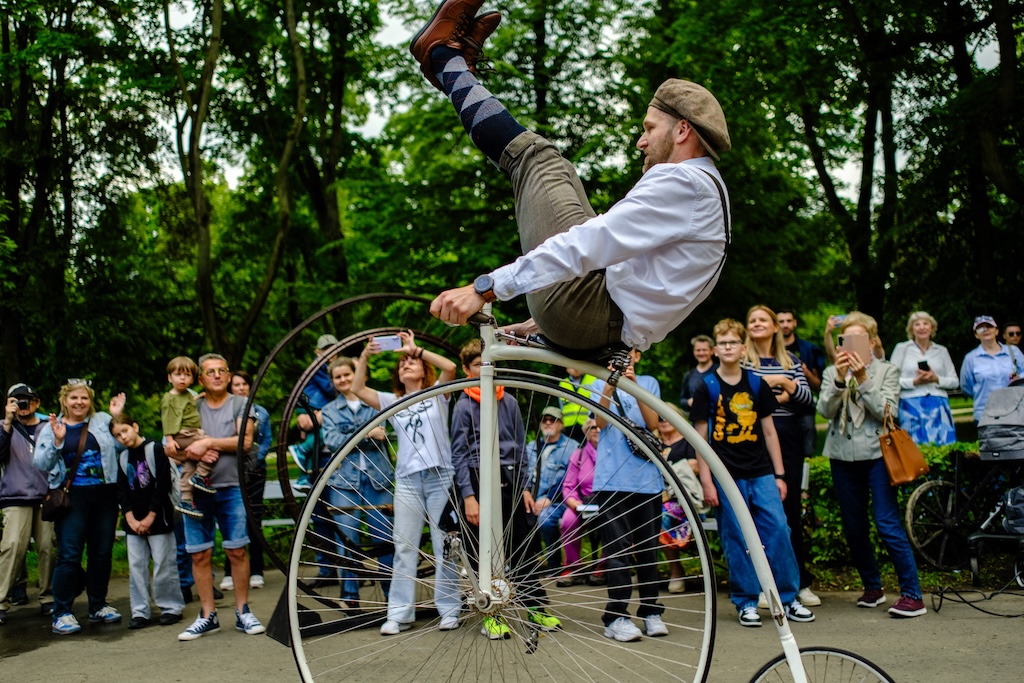
The Saxon Garden Festival began at 10 am with a lively, colourful musical parade. At its head rode riders on penny‑farthings with their enormous front wheels, followed by elegant ladies and gentlemen, orchestras, and other performers – together evoking the atmosphere of bygone days, when the garden was known as Warsaw’s ‘green parlour’. It is worth remembering that the event also pays tribute to the Saxon Garden’s earliest history, marking the 298th anniversary of its opening to Warsaw residents. On 27 May 1727, Augustus II the Strong opened his royal garden, creating Poland’s first public park.
Retro stalls along the main avenue
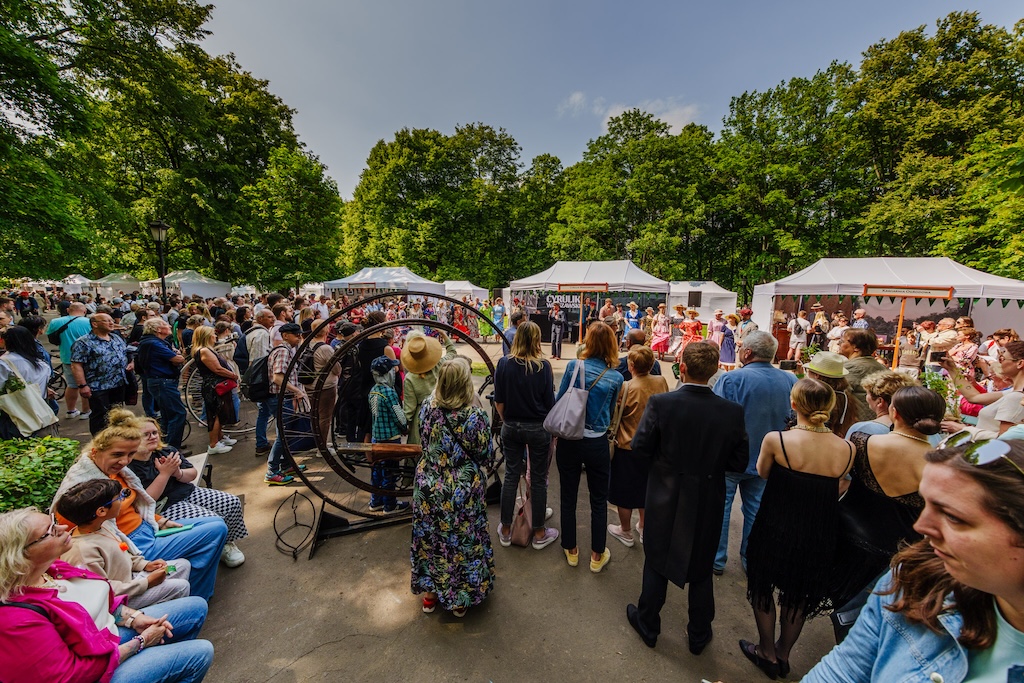
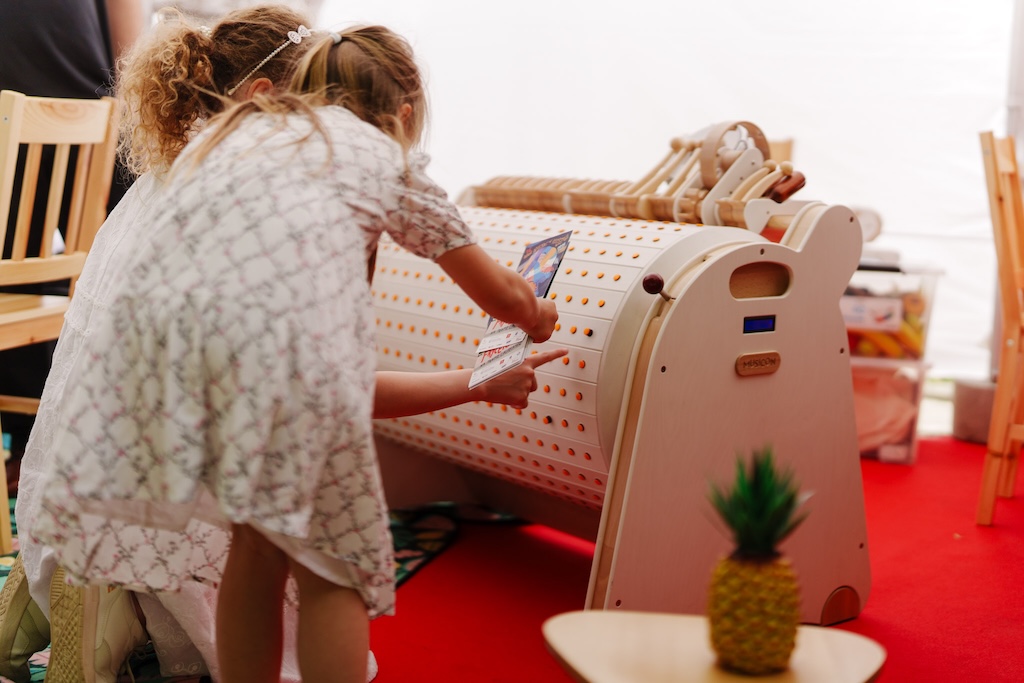
Throughout the day, festival‑goers could browse stalls set up along the main avenue of the Saxon Garden, where traditional crafts were on show and visitors learnt fascinating details about 1920s and 1930s fashion and customs. Historic tools were also demonstrated, and even the age‑old art of coffee brewing was showcased. There was also a retro photo booth, where visitors could take home a vintage‑style photographic keepsake. In addition to traditional games and workshops for children, a new attraction debuted this year: the Fryderyk Chopin Institute stall, where children could try out a musical machine called Musicon. Older children could try their hand at calligraphy workshops based on the young Chopin’s handwriting.
Meanwhile, the Polish History Museum’s Embassy encouraged visitors to have their say by voting in a poll to choose their favourite crowned ruler of Poland. For now, we can reveal only that 757 people cast their votes. The final results will be announced on 6 July during ‘Feast at Chrobry’s Court’, which is to be held at the Warsaw Citadel. Some participants even made it to the Citadel during the festivities, as the Polish History Museum organised a guided walk, setting off from the fountain at 12.30 pm and lasting an hour and a half, with guides recounting the history of Warsaw’s landmarks along the route.
The hub of this part of the Saxon Garden Festival was the Saxon Café stand, serving as an information point. Here, visitors could pick up a commemorative postcard inviting them to take part in a game. After collecting five stamps from selected stalls – which, according to members of the Women’s Military Training Reconstruction Group (OGRH Przysposobienie Wojskowe Kobiet), was no easy feat, as it involved both physical activities and maths challenges – participants could return to the stand and claim one of several small prizes. Among them were a ‘piece of the Saxon Garden’, namely a wild rose seedling, as well as giveaways highlighting the story of the artefacts discovered during nearby archaeological investigations, and educational materials on the Saski Palace. Each stall also offered a special one‑day publication – ‘The Saxon Gardener’ (Ogrodnik Saski) – a retro‑style newspaper containing the event’s programme. Its pages also featured intriguing snippets related to the festival’s attractions and the history of the area, including, for example, the secrets of the Enigma machine.
Attractions along the avenues
The most interesting attractions were not confined to the retro stalls. These were complemented by displays of velocipede riding (organised by Bicykle.pl), lively street performances by musical groups (such as Brass Federacja, AllDęte, and Olek Orkiestra), and fashion shows presented by, among others, the Historical Re-enactment Group Bluszcz. As last year, the Song and Dance Ensemble ‘Warszawianka’ (ZPiT Warszawianka) gave performances and on several occasions invited festival‑goers to join a communal polonaise through the garden’s paths. At the western end of the main avenue, a traditional carousel spun continuously from morning until evening, delighting the youngest visitors with its dazzling array of colours.
Marshal Józef Piłsudski Square: a place full of life
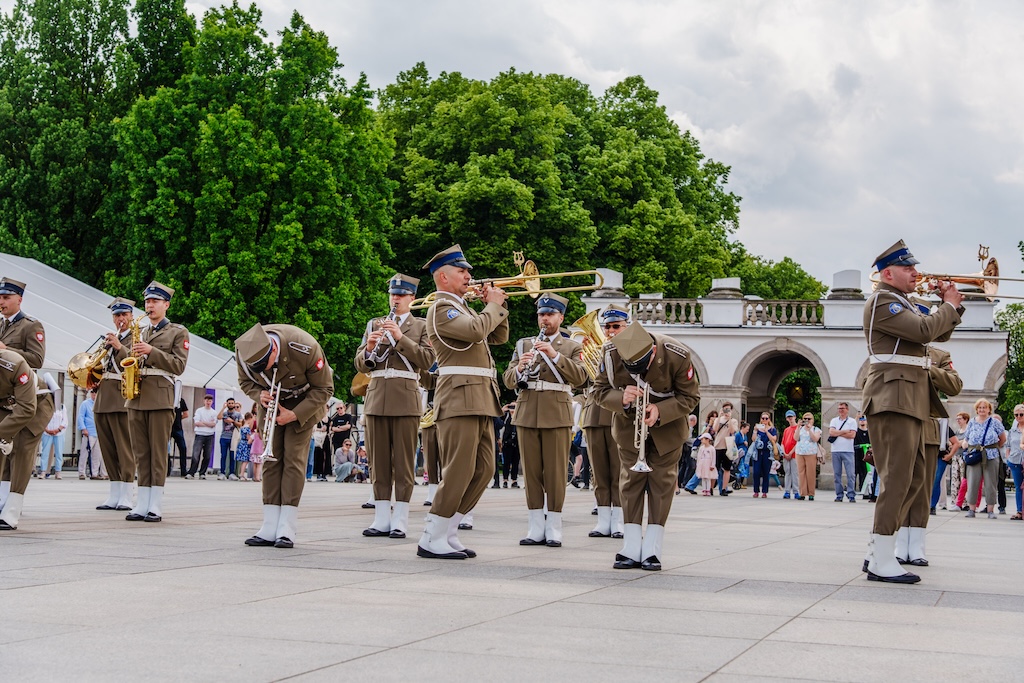
This year’s edition of the Saxon Garden Festival also offered numerous attractions beyond the park’s boundaries. For instance, in front of the Tomb of the Unknown Soldier, there were performances by the Rzeszów City Girls’ Brass Band ‘Fanfara’ and the Lublin Military Orchestra, including ceremonial drill displays. These performances were hard to miss – spurred on by the music, passers-by eagerly joined in.
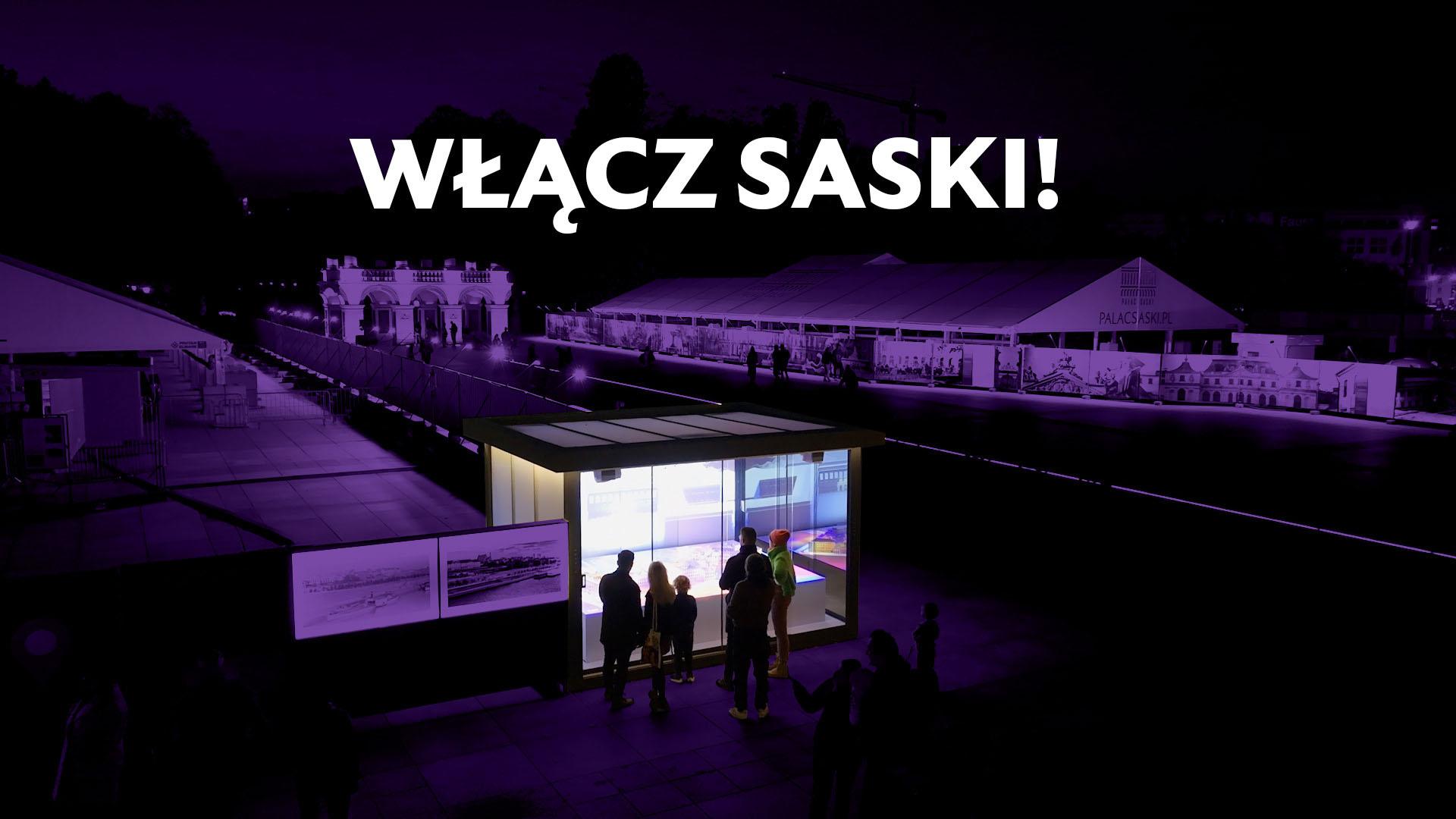
In the same area – in a glass pavilion near the centre of the square – visitors could see a genuine Enigma cypher machine, on loan from the Intelligence Agency. The device is not normally on public display, so the Saxon Garden’s birthday celebration provided a unique opportunity to examine this artefact and learn about its history. The pavilion also served as one of the checkpoints in a city‑wide game telling the story of Poland’s cryptologists in the 1930s, starting at the Polish History Museum’s stand. On the opposite side of the square, another glass pavilion housed a detailed model of the western frontage of Piłsudski Square – the complex of buildings currently undergoing reconstruction, including the Saxon and Brühl Palaces, and the three tenement houses on Królewska Street.

A little further on, in the car park outside the Hotel Europejski, motoring enthusiasts could admire vintage cars from the Automotive Museum in Otrębusy and the BlitzTeam collection. The gleaming bodywork of these vintage cars delighted visitors and passers-by on nearby streets alike, as the vehicles made regular laps around the square and garden. On their way back from the car display to the Saxon Garden, visitors passed another attraction on Piłsudski Square – a stand featuring a QR code. Scanning it with a smartphone launched a 360-degree video reconstruction of the square’s former appearance, including the Saxon Palace and its iconic colonnade.
Music stage by the pond
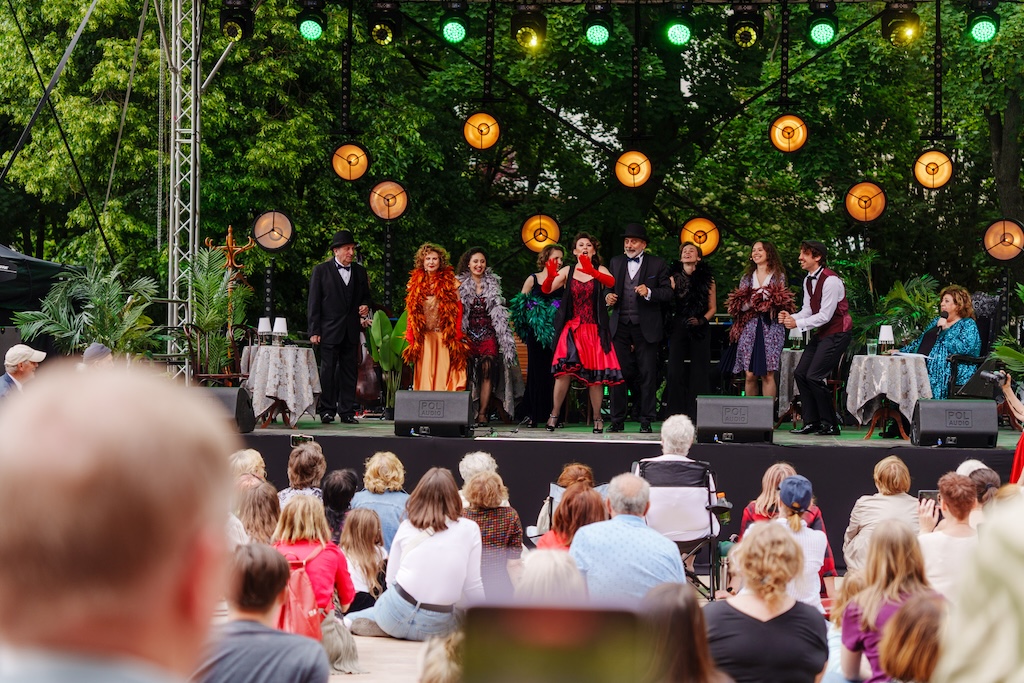
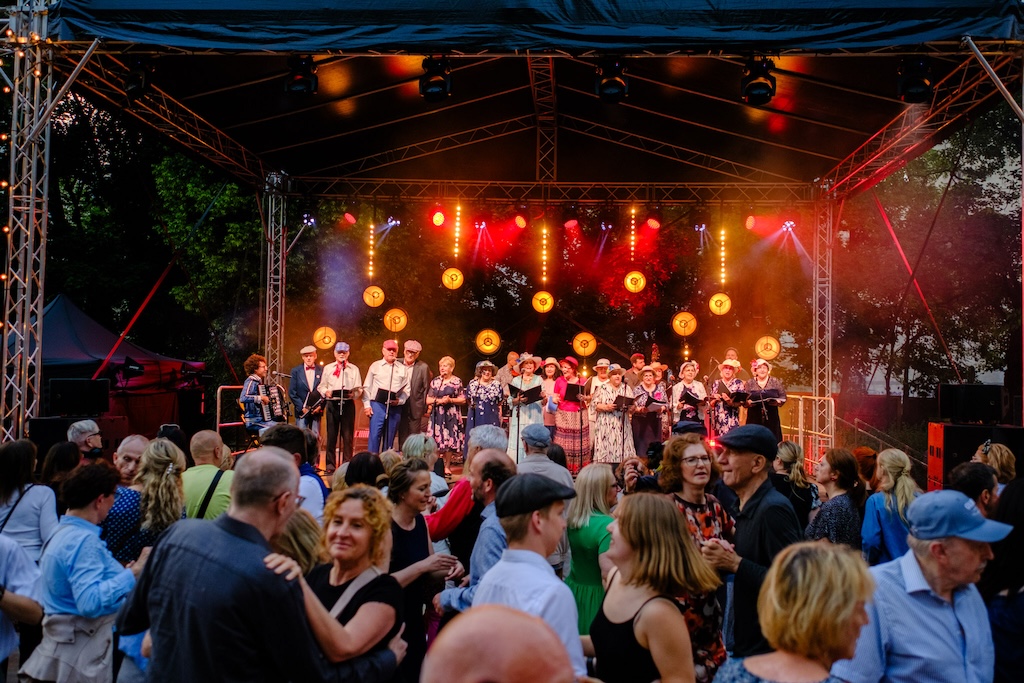
In addition to musical groups performing throughout the garden, visitors could also enjoy cabaret shows and concerts on the stage by the pond. At 1 pm, crowds gathered for ‘Gołda Tencer Presents: The Hits of the Jewish Cabaret’. The lively, humour‑filled hour‑long show revived pre‑war musical hits, with lyrics by luminaries such as Tuwim, Jurandot and Hemar. It also evoked the site’s theatrical tradition, as the Saxon Garden once housed both the Summer Theatre and the Opera House.
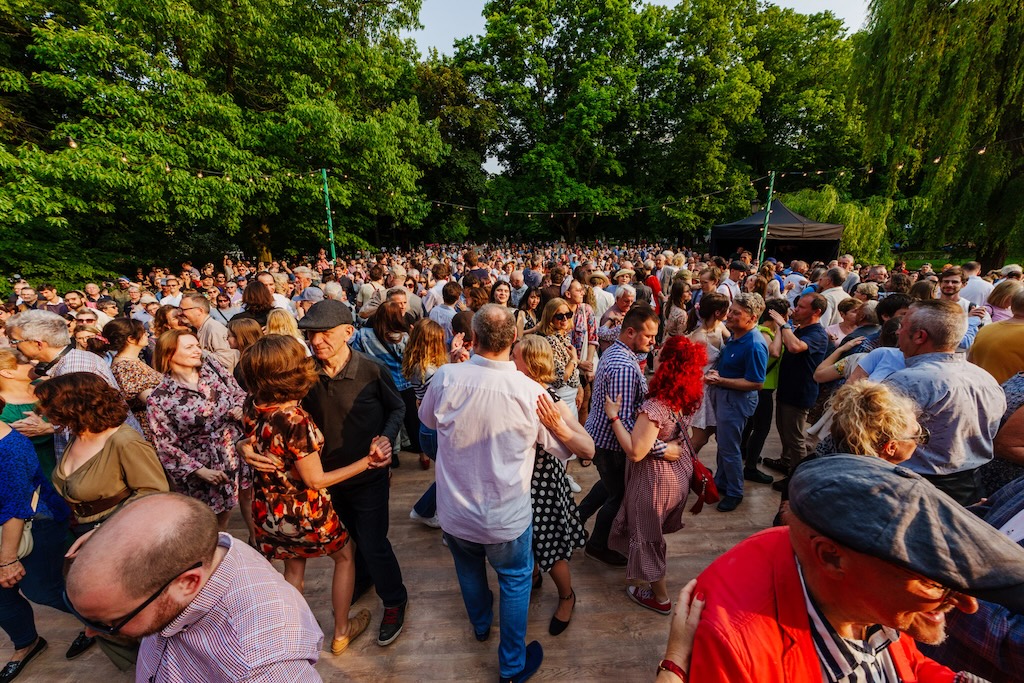
This year, too, there was no shortage of the now‑traditional dancing by the pond. At 6 pm, the legendary Warsaw Sentimental Orchestra invited everyone to dance, with a repertoire from the inter‑war period. The audience, already warmed up, was then greeted by the energetic CzessBand, which – together with the group Cała Praga Śpiewa – led the crowd in lively dances to the rhythms of Warsaw folk music.
Historic balloons by the Saxon Garden
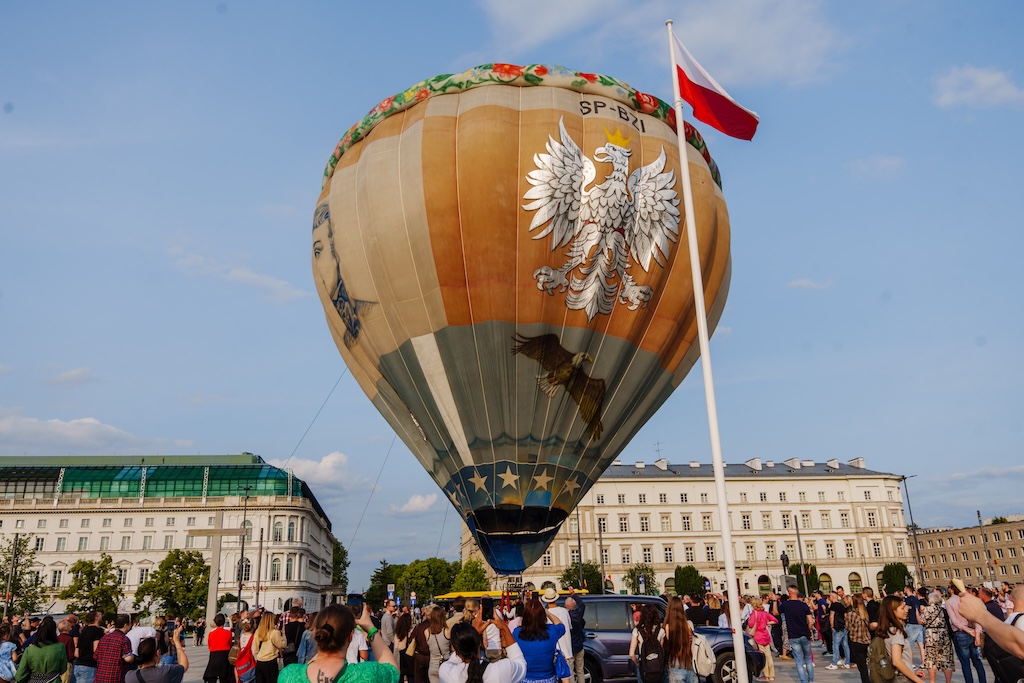
As the dancing began, Piłsudski Square became the stage for a historic moment. For the first time in nearly a century, balloons returned to the area, recalling, among other episodes, the launch of the balloon ‘Legionowo’ in March 1935. One of these balloons, the historic ‘Kościuszko’, came all the way from the Polish Aviation Museum in Kraków and impressed those gathered in the square with its decoration, including a floral wreath. The second, a modern balloon brought by the Balonowa Strona Nieba Foundation, was equally impressive – above all for the breathtaking views it afforded to festival‑goers who went up for a flight. Priority boarding was given to dancers who answered questions in the history quiz, although those who patiently waited their turn also had the chance to soar into the sky and see the Saxon Garden and the exposed remains of the Saski Palace from above. Our thanks go to the neighbouring Warsaw Garrison Command and the State Protection Service for making these flights possible.
We would also like to thank everyone who joined us for the fourth edition of the Saxon Garden Festival. See you next year for the Saxon Garden’s birthday celebrations!