Reconstruction of the Saski Palace: 2024 summary
The latest stages of preparatory works for the reconstruction of the Saski and Brühl Palace complex, as well as the three tenement houses on Królewska Street in Warsaw, are nearing completion. In 2024, works carried out on the site at Marshal J. Piłsudski Square focused primarily on safeguarding the historic fabric represented by the remains of the General Staff of the Polish Army and Ministry of Foreign Affairs buildings, which were blown up 80 years ago. At the same time, the Pałac Saski company has, among other steps, secured environmental consent for the scheme and prepared a design contract.
Work in Piłsudski Square
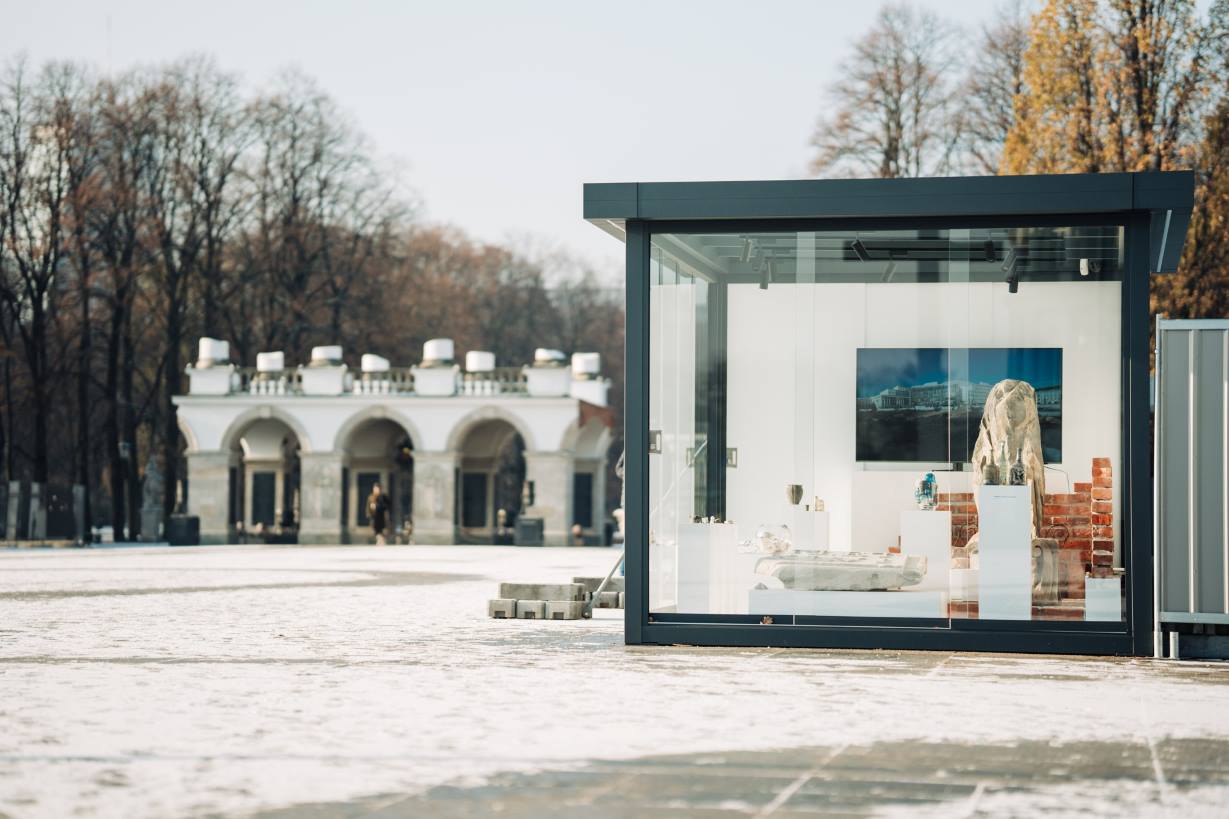
The reconstruction of the western frontage of Marshal J. Piłsudski Square in Warsaw has been underway since late 2021, when, under the Parliamentary Act on the Preparation and Implementation of the Investment (Journal of Laws 2024, item 578) the Pałac Saski company was established. After obtaining a number of permits and concluding agreements and contracts with landowners and utility/network operators, the appearance of the square began to change. Once again, the remains of the Saski Palace walls were brought to light, followed – for the first time – by those of the Brühl Palace, where archaeologists conducted the first stage of excavations in the latter half of 2023. This resulted in the recovery of nearly 10,000 artefacts, a selection of which is on display in the ‘Treasures of the Brühl Palace’ exhibition in Piłsudski Square.
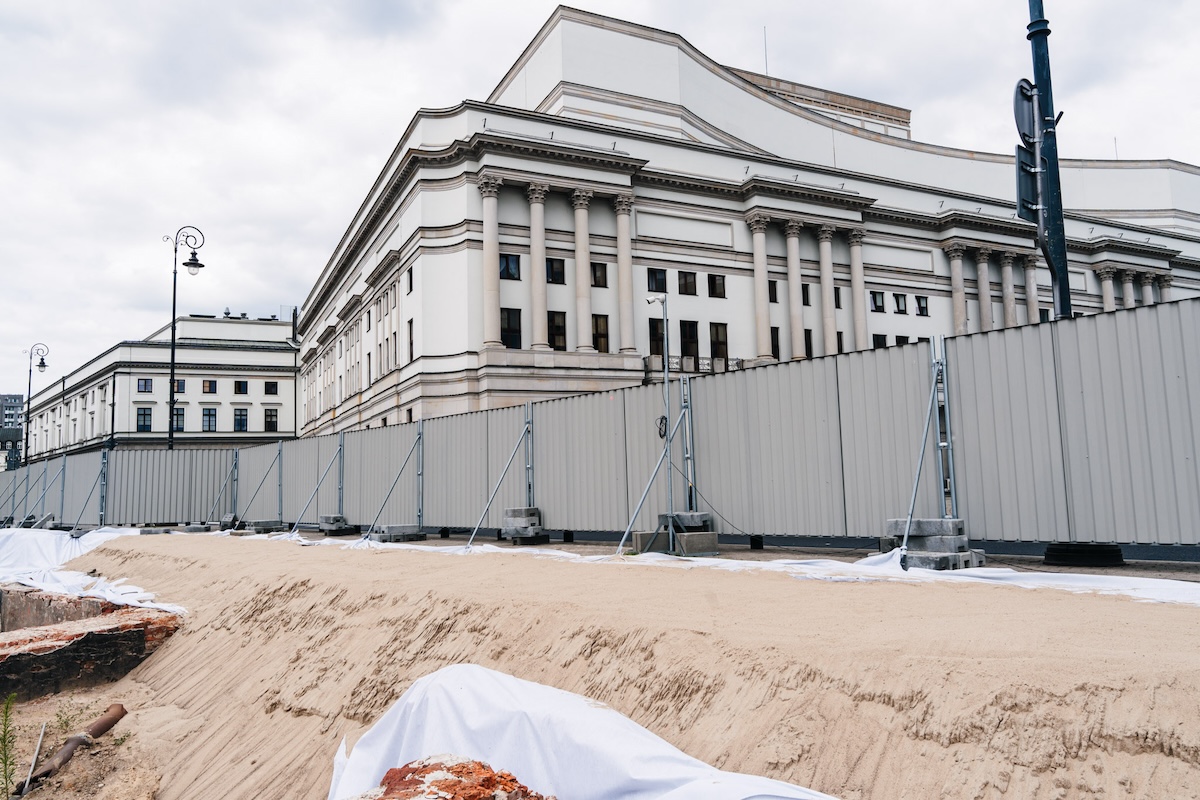
At the start of 2024, some of the Saski Palace remains, which are listed in the register of historic monuments, were given a temporary canopy to protect them from the effects of rain. Further preventive works took place in June, when the wall of the archaeological excavation was secured. This work was primarily aimed at ensuring the safety of vehicular traffic on Wierzbowa Street and preventing the slope formed during the archaeological investigations from collapsing. In some areas, the excavation walls reached depths of up to three metres, so stabilising them was critical to the safety of workers on site.
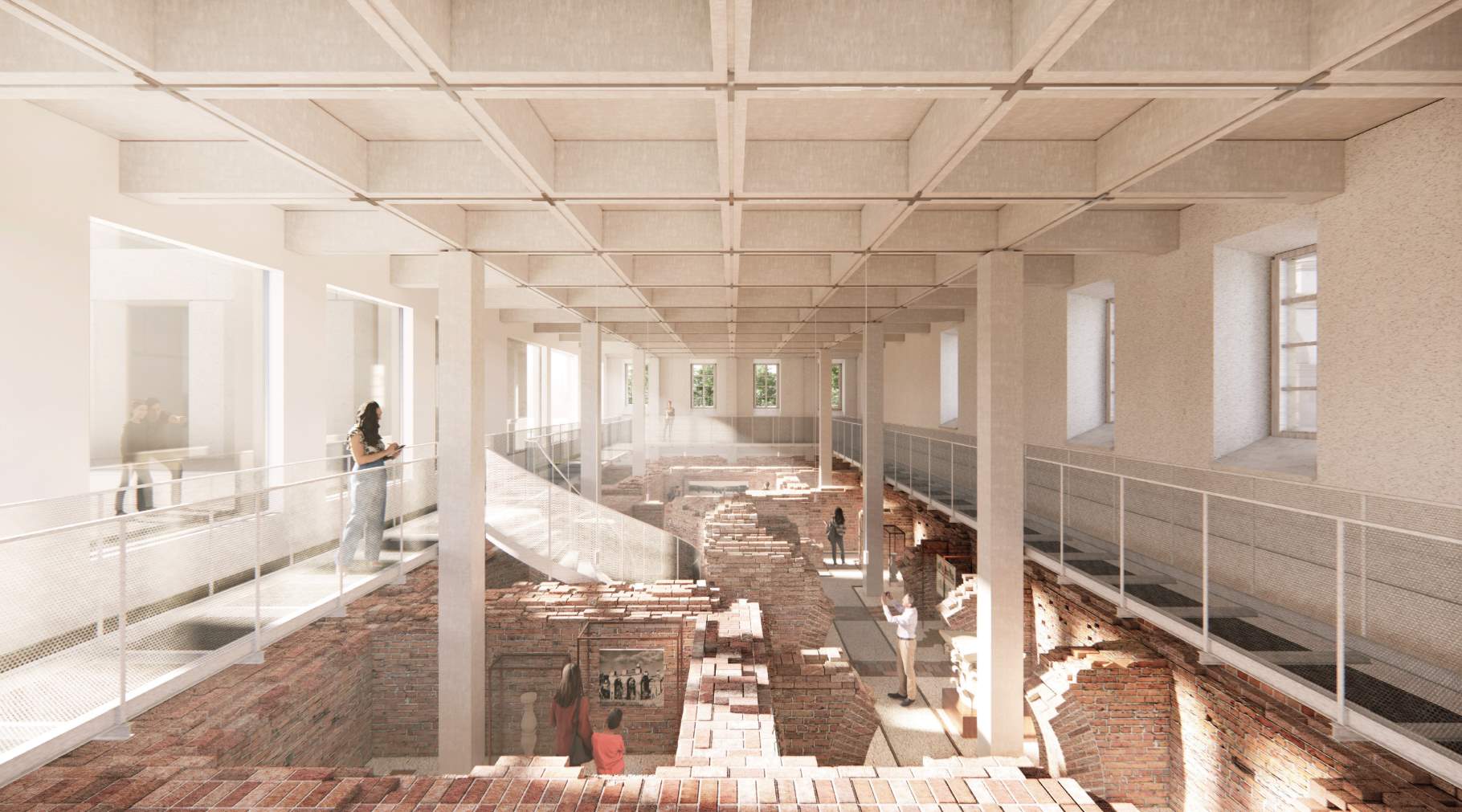
The uncovering of the ruined palace foundations and archaeological investigations prompted the next stage of works, undertaken later that year. This phase saw specialists in conservation, microbiology and structural engineering undertake a programme of conservation research. The first phase of this work involved cataloguing and assessing the condition of structural elements, taking into account the existing historic stratigraphy. Why does this research matter for the project? Its overriding purpose is to protect the historic fabric, which, in line with the architectural competition rules and the winning reconstruction concept, will be preserved and made accessible to future visitors to the Saski Palace.
3D documentation of historic architecture
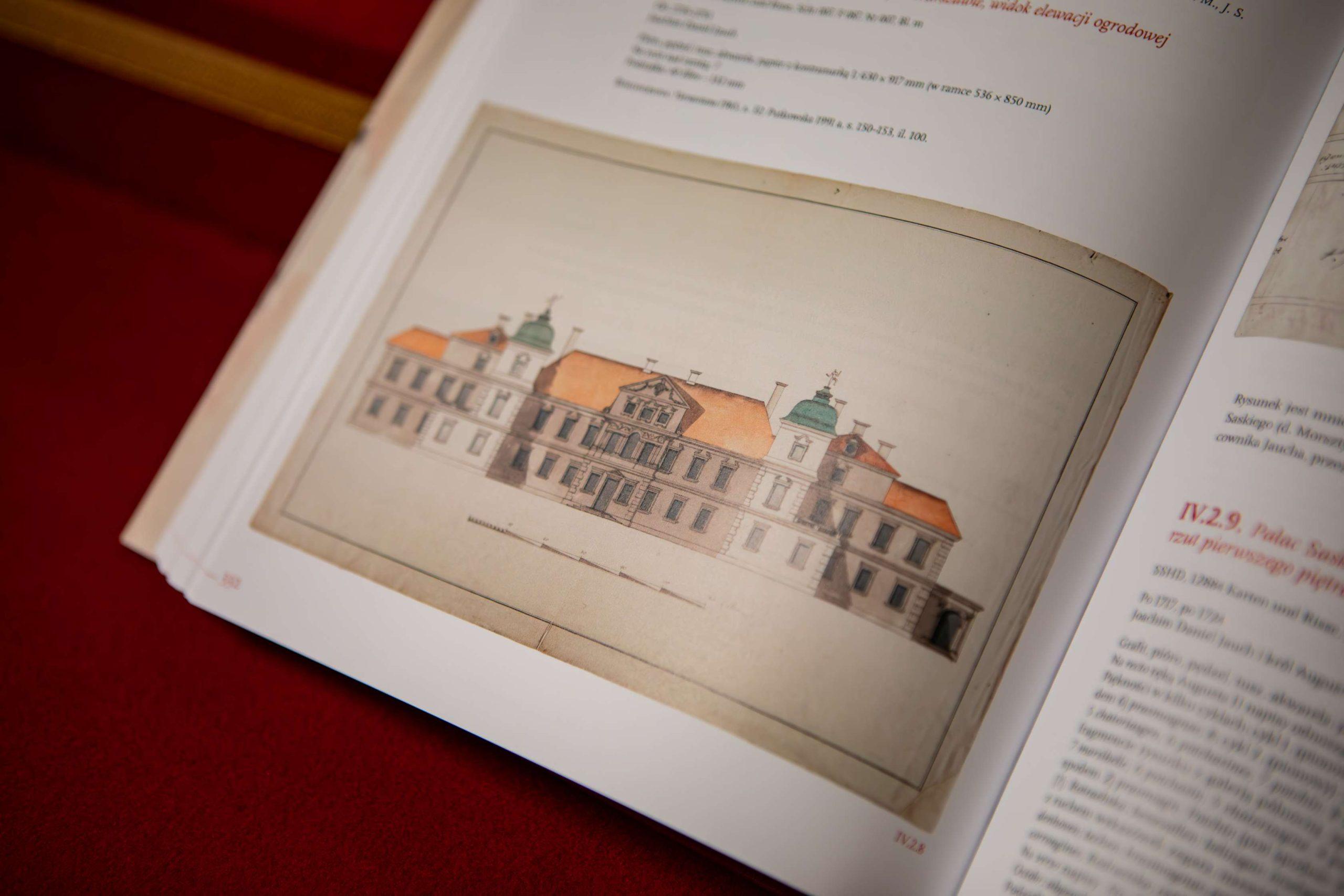
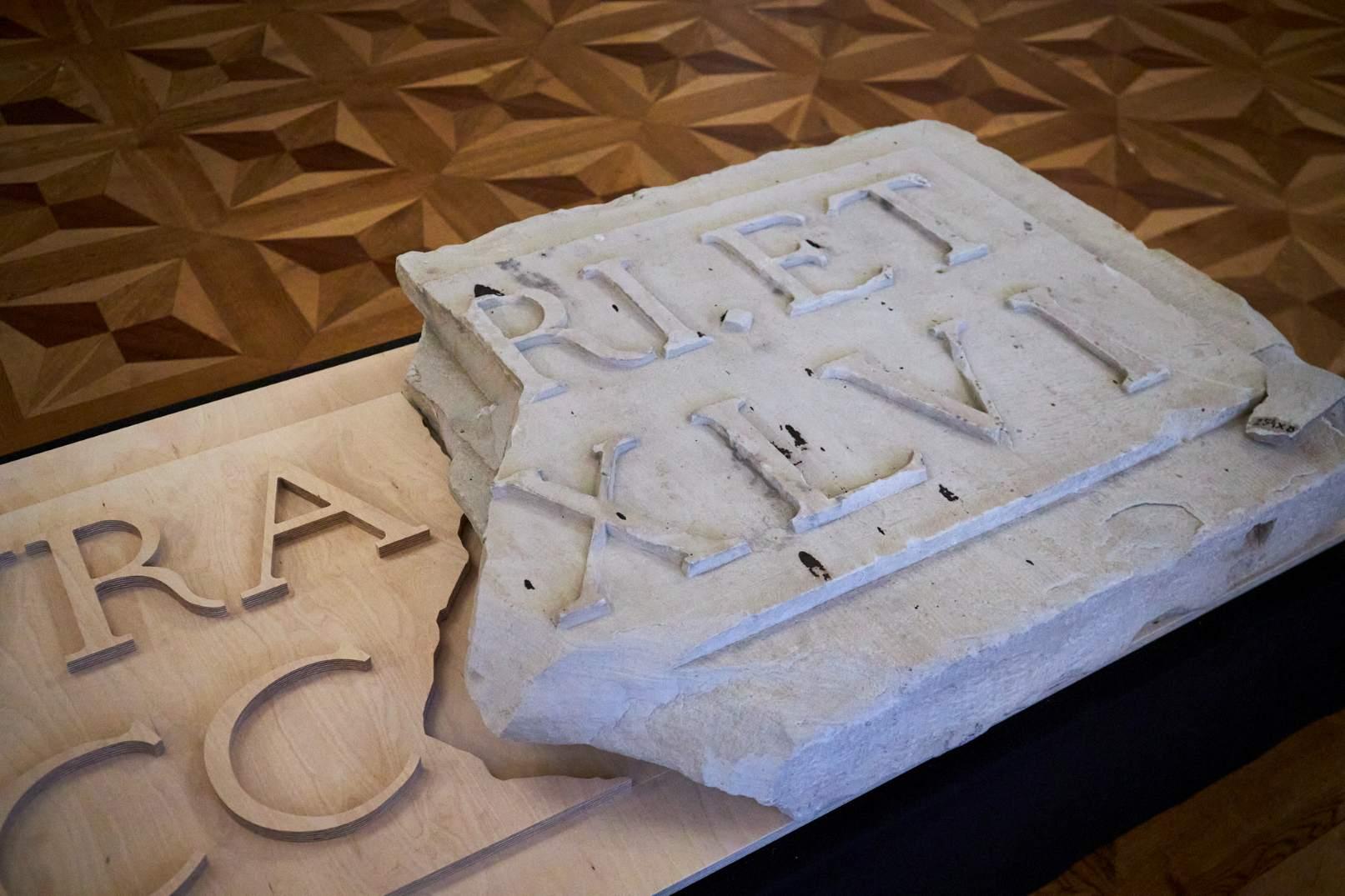
In 2024, preserved fragments of the now‑lost palaces were also the subject of off‑site work beyond Piłsudski Square. These include fragments of the former façades of the Saski Palace, the Brühl Palace, and the Beck Pavilion, which are held in the collections of the Museum of Warsaw as well as in collection stores organised to house objects recovered during recent archaeological investigations. They were 3D Scanned, enabling the refinement of the geometry of the historic buildings to be restored, and as a result the most faithful possible reproduction of the exterior of the palace‑and‑tenement house ensemble – in line with the reconstruction law, matching its appearance as at 31 August 1939. Nearly 150 objects were placed before the measurement system’s lens for the first time, and the 3D documentation produced for them will inform both the detailed architectural design and the sculptural decoration restoration programme.
Conceptual work on the reconstruction of the Saski Palace
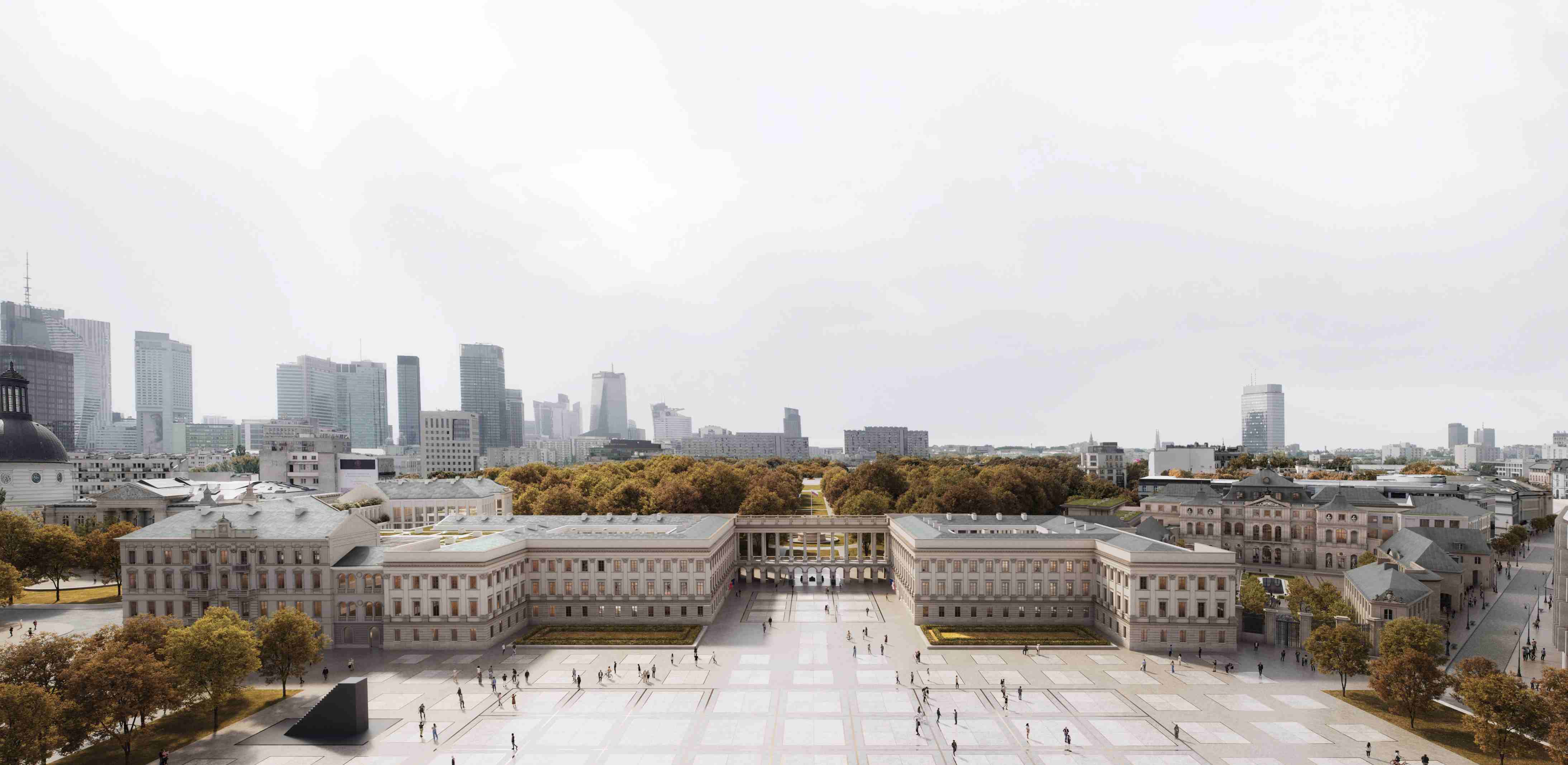
Alongside fieldwork, the past year was an intensive period of concept and procedural work, including the preparation of key documents. Chief among these is the contract to develop the architectural design, including landscape design, for the ongoing reconstruction of the western frontage. To meet the highest standards in the construction sector, including environmental requirements, the first draft of the contract, prepared at the turn of 2023/2024, underwent rigorous analysis and served as the basis for a second, more extensive version. This revised draft sets out the terms of engagement with the design practice more precisely, broadens the scope of works, and incorporates contingencies linked to, for example, ongoing archaeological investigations. The draft contract is currently awaiting approval from the General Counsel to the Republic of Poland, as required due to the scheme being funded from the state budget, and from the Ministry of Culture and National Heritage. The next step will be negotiations with the architectural practice selected through an international competition run by the Association of Polish Architects (SARP). The winning architectural concept presented by the WXCA Group has received recognition not only within Poland. In September, it won the Restoration/Renovation category award at the 2024 International Architecture Awards, standing out among more than 850 entries submitted to the international competition.
Among the less spectacular but crucial preparatory activities for the reconstruction process were the development of various technical analyses and tender documents. These included a review of the site’s utilities infrastructure and a plan for diverting the networks. A feasibility study for possible construction scenarios was also carried out in the context of other schemes in the city. Meanwhile, preparations are underway for an extensive programme of archaeological investigations to explore all cultural layers preserved on the site down to the natural (undisturbed) subsoil. In addition, tender documentation is being prepared to appoint the Contract Engineer – the client’s representative responsible for oversight – ensuring coordination between the client, the designer, the main contractor, and the relevant authorities and utility/network operators.
Another strand of ongoing restoration activities in 2024 comprised study work, under which the Pałac Saski company organised and ran the first series of expert workshops. Their main goal was to develop, through discussion, the ‘Good Practice Handbook’, a set of guidelines to be followed in delivering the reconstruction so as to reconcile historic precedents with contemporary needs and standards. The series included five meetings covering thematic areas such as lighting, stonemasonry, roof structures, window joinery, and plasterwork. Alongside the subject-matter specialists, representatives from the WXCA practice also participated, allowing questions about the current reconstruction concept to be addressed in real time.
Twenty‑first‑century architectural practice
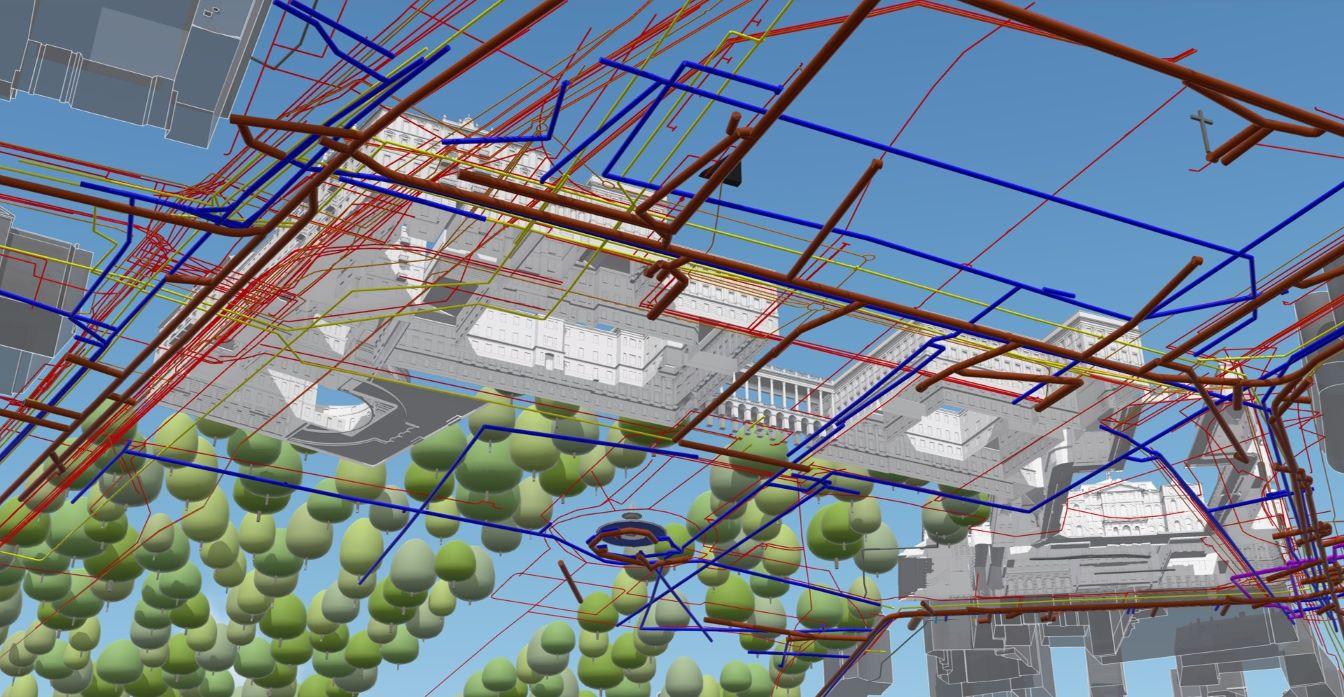
GIS, BIM, and CDE are among the many acronyms tied to the modern technologies and digital systems used daily in the ongoing restoration of the western frontage buildings at Piłsudski Square. These technologies are critical at the current stage of preparatory works, as they relate to the development, enhancement, and management of the project’s spatial model, as well as an ever-growing body of data, including drawings, models, registers, and schedules. GIS, or Geographic Information System, is essentially a geospatial model of all the reconstructed buildings, along with underground utilities and service networks. Although a basic version of the model was used to develop the schemes submitted to the architectural competition – including the winning entry – it is an open, evolving system. Architects at the Pałac Saski company continue to expand it, incorporating assets like high-resolution 3D documentation derived from scans of original architectural features.
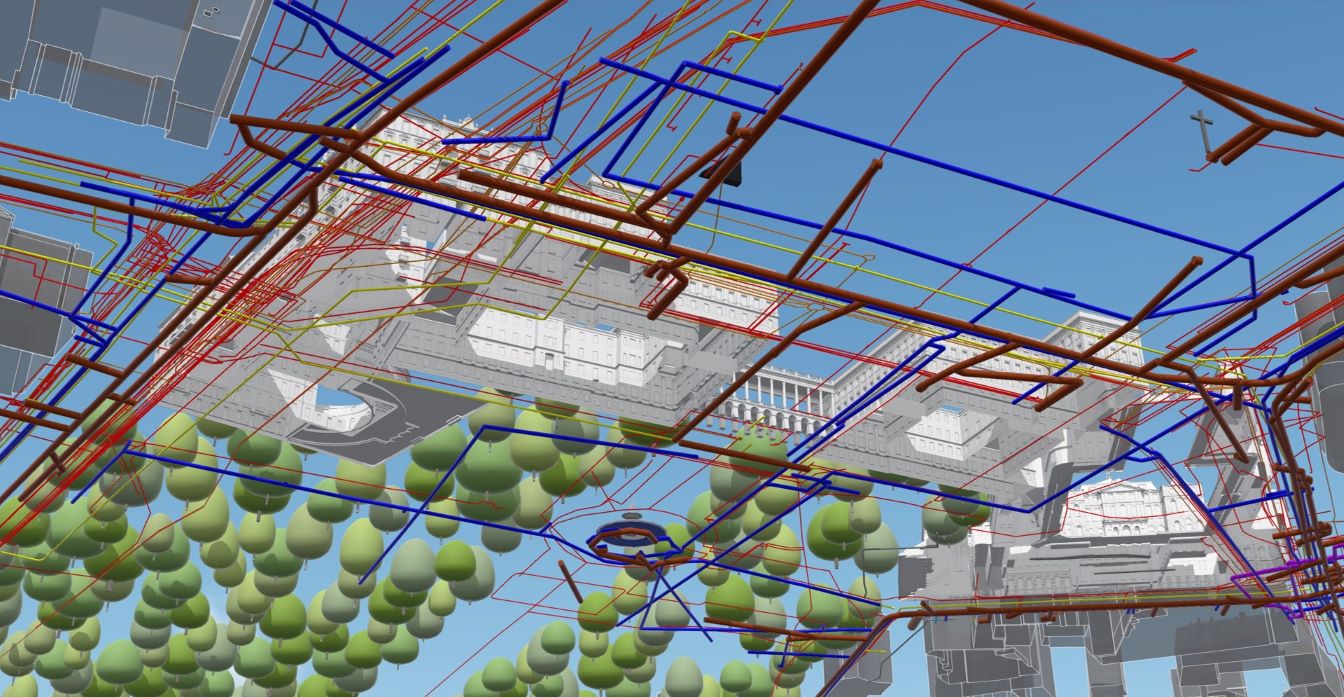
Over the past year, implementation of BIM (Building Information Modelling) on the reconstruction project also began. BIM is not a single tool but a methodology for delivering and managing a construction project. It entails maintaining a comprehensive digital record of the asset throughout its lifecycle, using a highly detailed digital model. It integrates multidisciplinary data across the asset’s lifecycle – from design and construction through to operation. To facilitate straightforward data exchange among all participants, the team will utilise a Common Data Environment (CDE). This serves as the project’s command centre, where much of the communication between, for example, the client, designers, contractors, future users, and supervising inspectors takes place.
Environmental decision
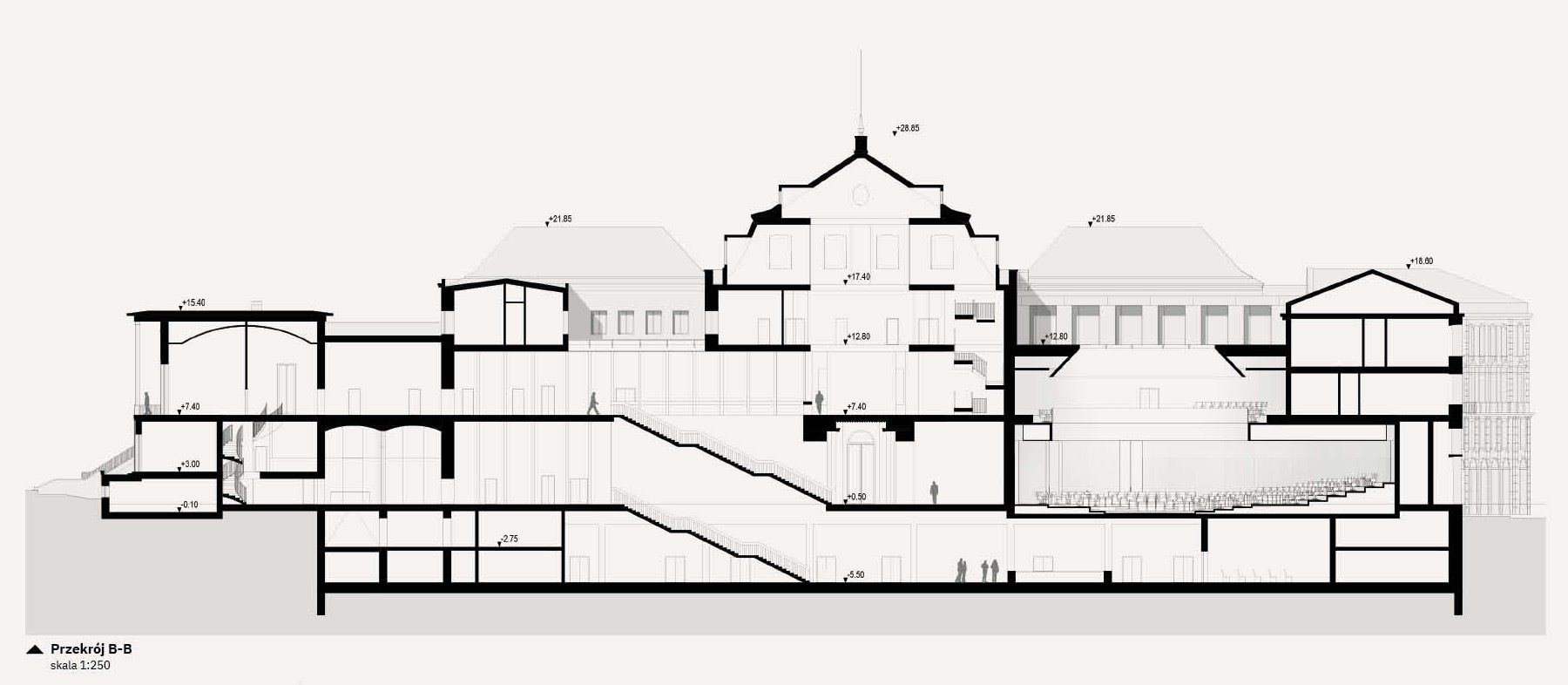
At the end of the year, the Regional Directorate for Environmental Protection issued a further environmental decision for the ongoing reconstruction of the western frontage of Piłsudski Square. This is the second such decision. The original decision, granted in late 2023, had to be updated following key design changes proposed by the winning team in the recently concluded architectural and urban planning competition. As a result, a new application was submitted, reflecting an updated Project Information Sheet. So, what changed? The number of basement levels has been reduced – from three to two. The traffic and access layout has also been revised: instead of three separate entrances, there will now be one main entrance – along with a designated emergency access point. Lastly, plans now include a retention tank to manage rainwater and snowmelt.
‘Around the cellars of the Saski and Brühl Palaces’ – open to all
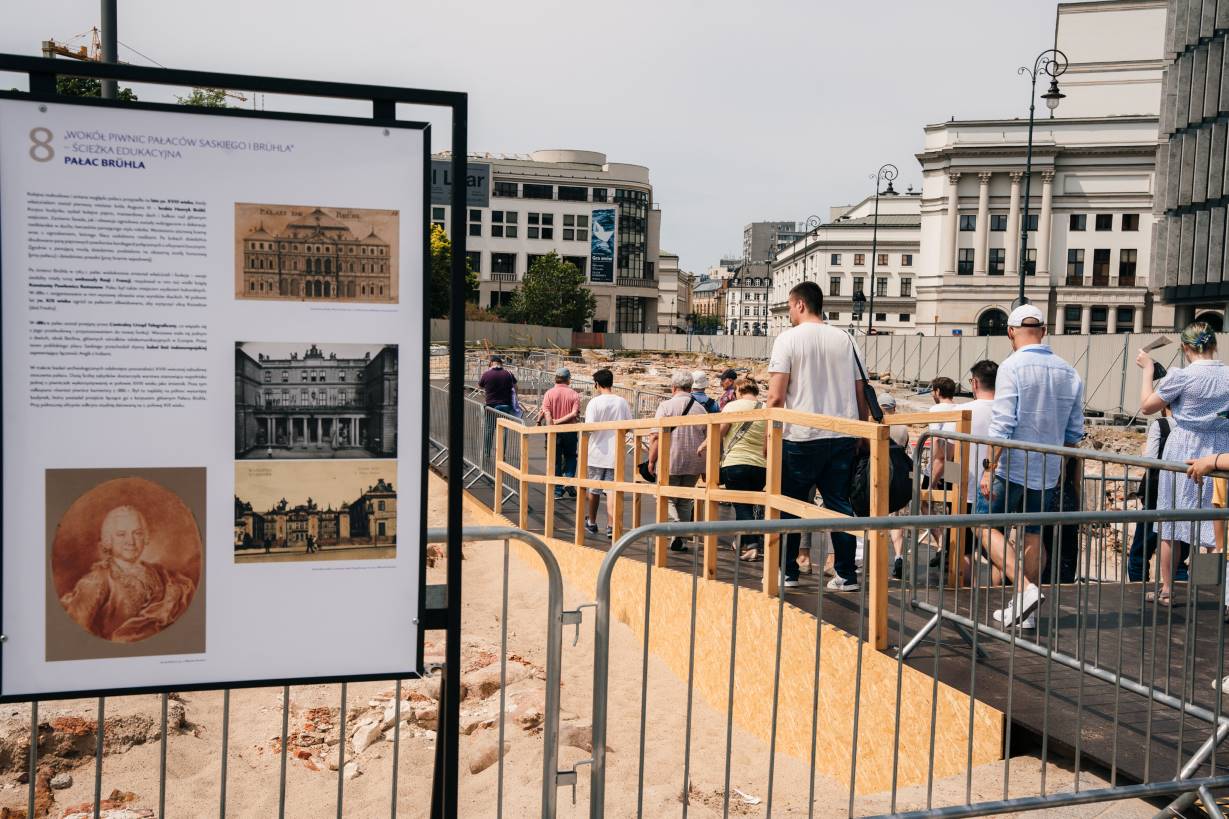
A successful second season of the educational trail within the project area, around the remains of the palace walls, has now concluded. More than 9,000 people joined free walking tours led by licensed city guides. Last year, the route was extended to include the area of the former courtyard of the Brühl Palace, where archaeological investigations had previously been carried out. Visitors once again had the opportunity to explore the most fascinating aspects of the site’s history, including the location of Józef Piłsudski’s residence and the spot where the Enigma code was cracked. They could also see the place associated with the so‑called ‘Warsaw Vampire’, as well as how a partially preserved bathroom in one of the Brühl Palace outbuildings was laid out.
Exhibitions in Piłsudski Square
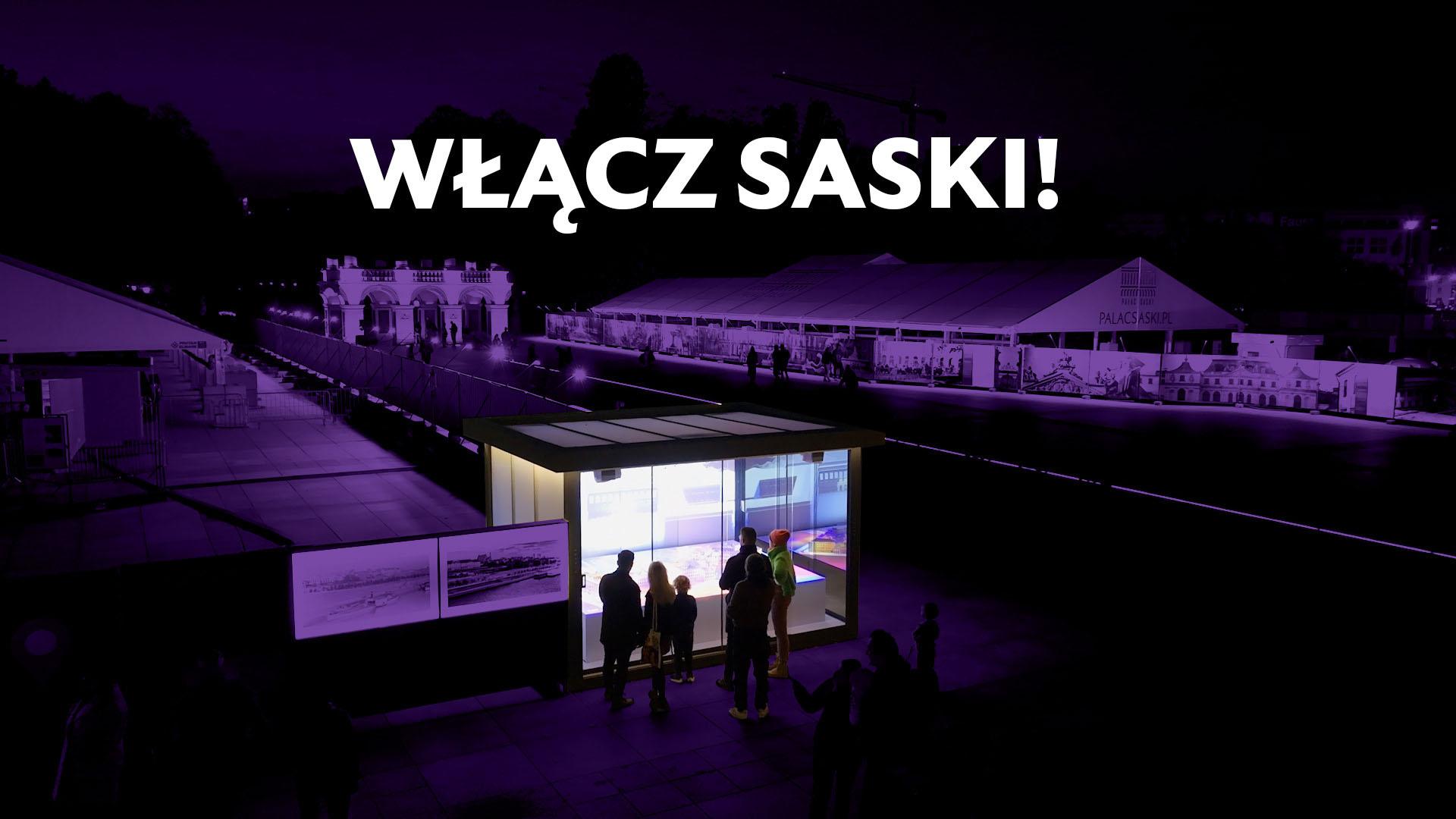
A real draw for visitors to the trail, as well as for passers‑by in Piłsudski Square, are the various exhibitions installed there. In the first half of the year, the exhibition presenting the reconstruction concept, which adorned the site hoardings, was replaced in August by the exhibition ‘Warsaw Then and Now: 80th Anniversary of the Warsaw Uprising’. It juxtaposed contemporary images of the capital with wartime and post‑war photographs of the same locations. Meanwhile, a second pavilion joined the exhibition space alongside the ‘Treasures of the Brühl Palace’ pavilion. Behind its glass façade, it houses a model of the reconstructed western frontage of Piłsudski Square. More than a simple model of the restored city centre, in the evenings it becomes the centrepiece of the multimedia show ‘Switch on the Saski Palace!’.
The Saski Palace at conferences and in publications
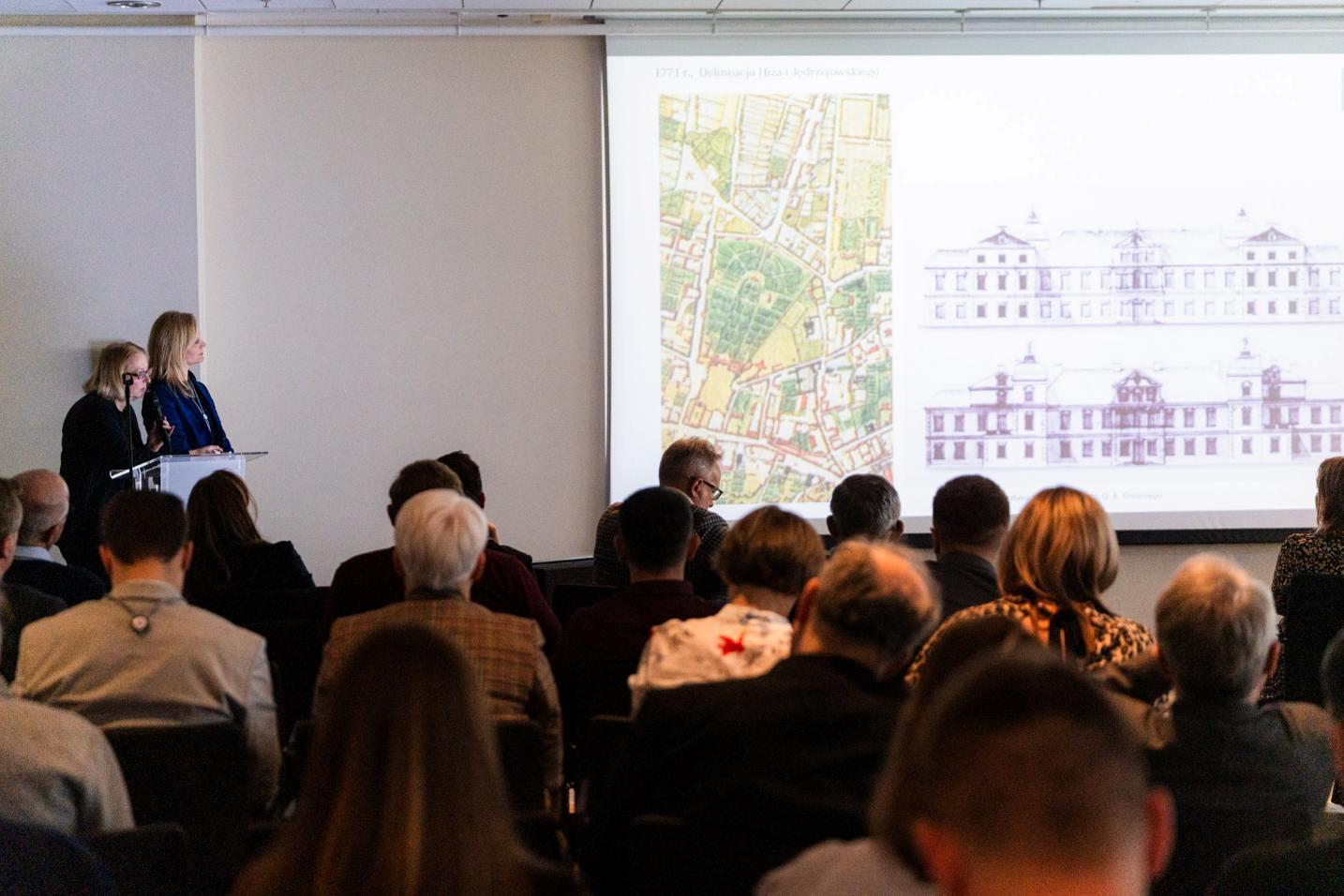
The subject of the restoration of the Saski Palace and its neighbouring buildings has long attracted considerable interest in academic circles. That remained the case in 2024: at the April conference ‘Cultural Heritage and the Investment Process’ at the Silesian Museum in Katowice, one of the lectures explored how to harness the potential of the historic urban composition of the Saxon Axis. Meanwhile, the 16th Conservation and Architectural Conference – part of the ‘Between Orthodoxy and Creation’ series – dedicated an entire panel to the reconstruction of the western frontage of Piłsudski Square. On the second day of the conference, representatives of WXCA Group gave a presentation on the city‑shaping role of reconstructing the historic architecture along Piłsudski Square’s western frontage, followed by a debate titled ‘A Void in the Heart of the City: An Opportunity for the Recomposition of Warsaw. The New Saxon Axis’.
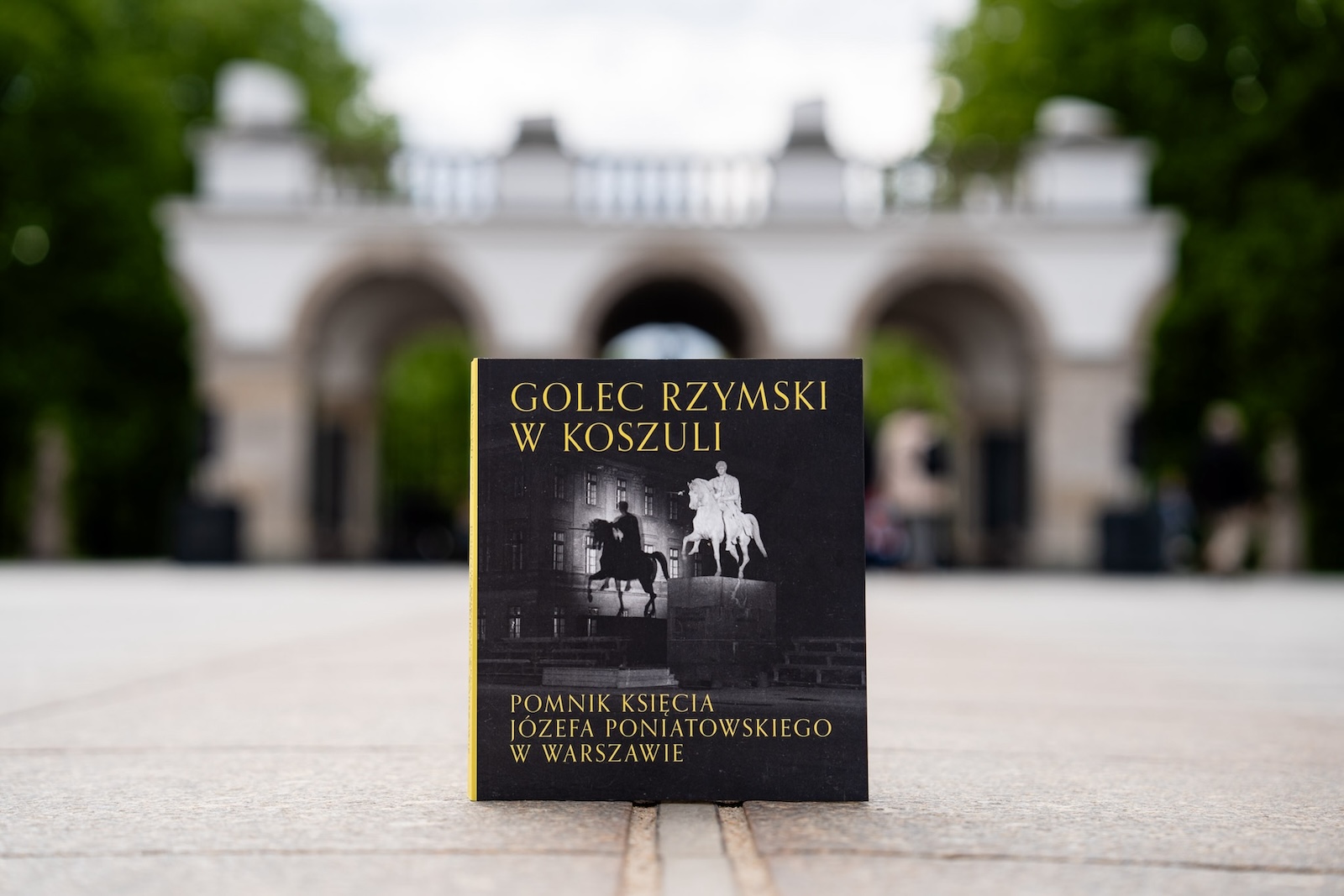
The dissemination of knowledge about both the reconstruction of the Saski Palace and its history was not confined to conferences last year. Thanks to collaboration between the Pałac Saski company and the Royal Łazienki Museum, a scholarly publication titled ‘The Roman Warrior in a Shirt. The Monument to Prince Józef Poniatowski in Warsaw’ was produced. It was launched on 3 May 2024, the 101st anniversary of the unveiling of the famous monument outside the Saski Palace. The authors set out the monument’s history in detail, explaining, among other things, the symbolism in Bertel Thorvaldsen’s work, and recounting the statue’s eventful journey before it was finally installed outside the headquarters of the General Staff of the Polish Army at the Saski Palace, after many years in Homel. This richly illustrated volume is available from the Royal Łazienki Museum’s shops, including its online shop.
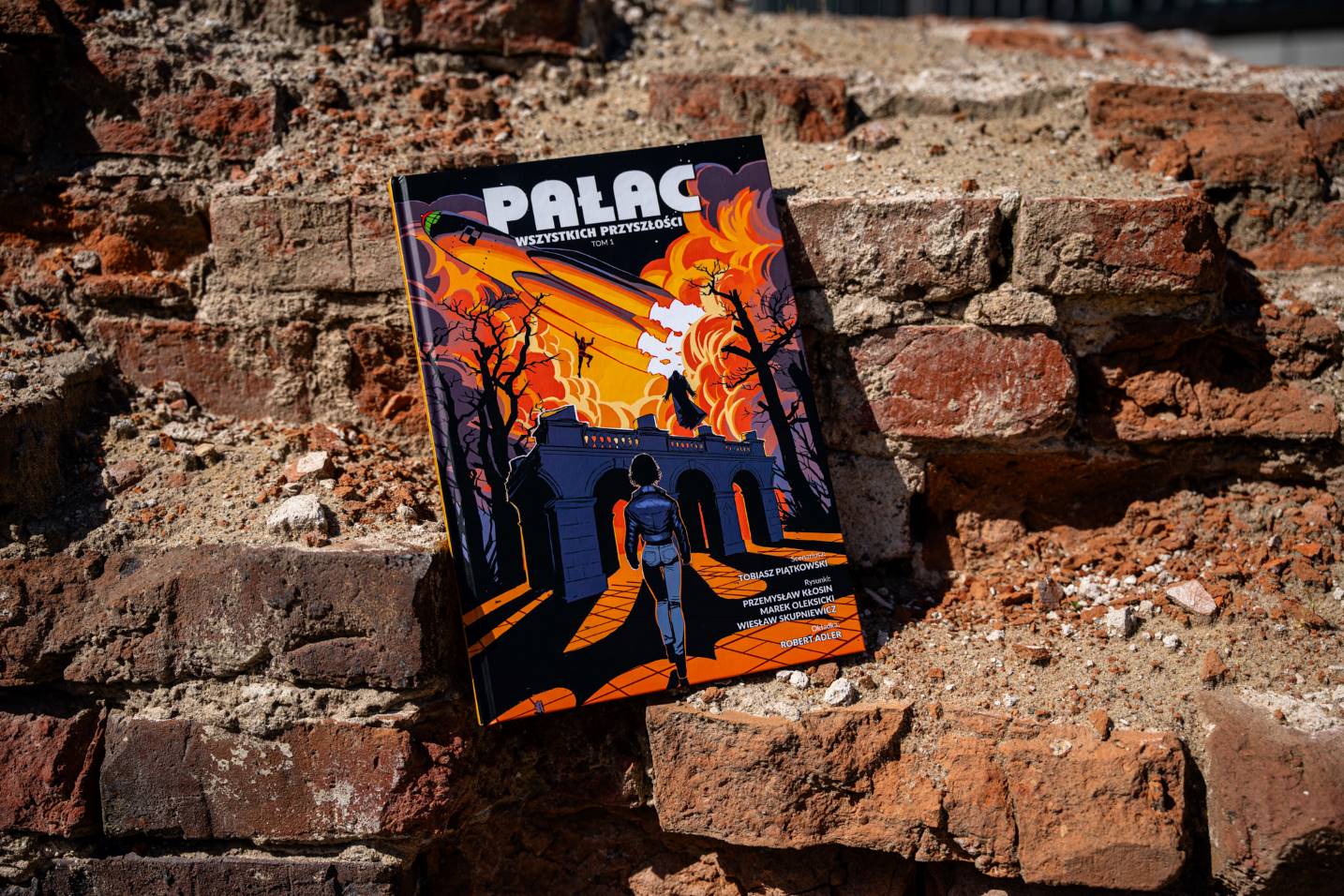
In May, a very different publication appeared – an alternative history of the Saski Palace in graphic‑novel form. The first volume of the illustrated series ‘The Palace of All Futures’, produced in collaboration with Egmont Publishing, brings together three intriguing stories in which fictional and historical figures cross paths, and where the demolition of the palace walls is not always a foregone conclusion.
The Saski Palace: a new cultural hub
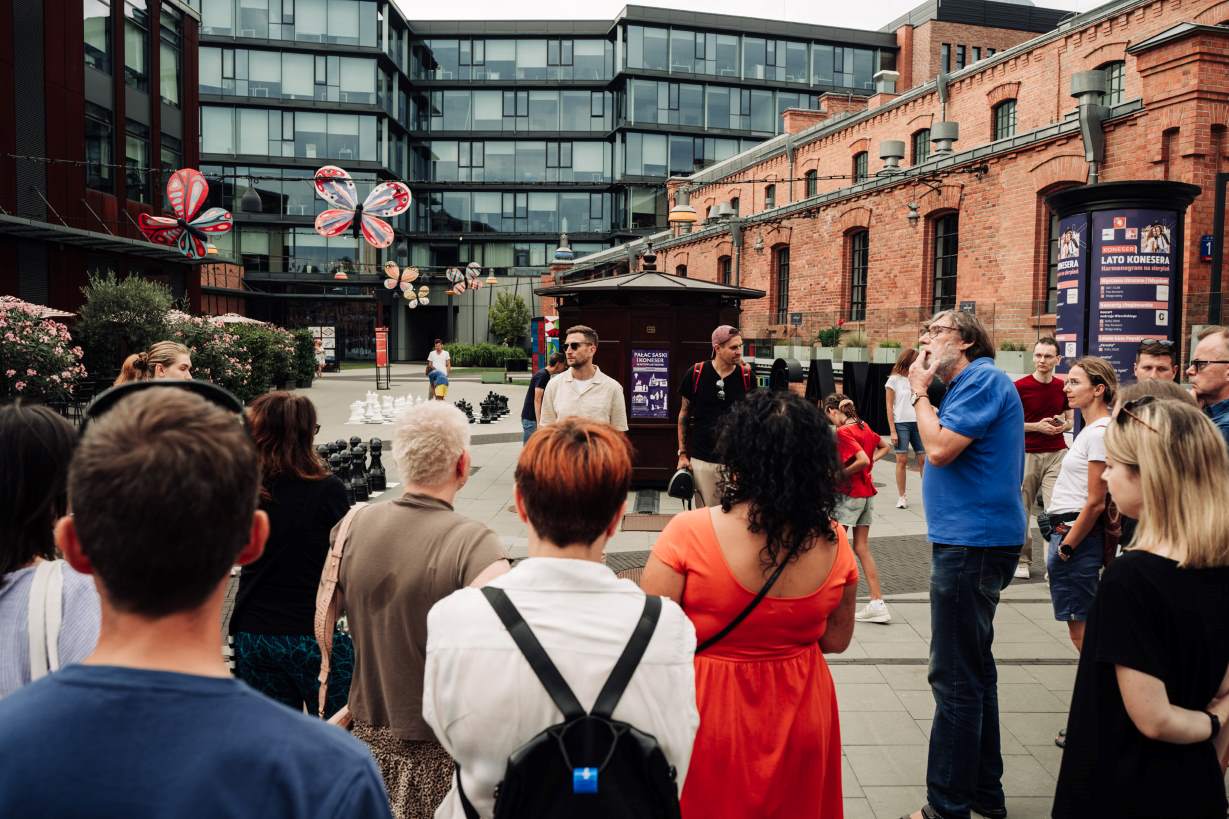
Under the Act on the Reconstruction of the Western Frontage of Piłsudski Square, the newly constructed buildings will be allocated ‘for the needs of entities carrying out cultural, educational or socially useful activities’, so the site is already evolving into a cultural hub. In addition to the year‑round exhibitions already in place, other initiatives also merit attention, such as walks along the ‘New Saxon Axis’ route. These offer an opportunity to uncover some of the most interesting – and often little‑known – strands of history, through free guided tours of selected corners of the capital. Over four walks, held at noon on summer and autumn Sundays, guides discussed history, culture and sport, highlighting figures associated with specific points along the Saxon Axis, including Frederic Chopin, Bolesław Prus, Jadwiga Łuszczewska (also known as Deotyma), and Janusz Kusociński. Each walk ended at the Praga Koneser Centre, where participants could step back in time to see what the Saski Palace once looked like, thanks to the photoplasticon housed there, which contains historic photographs of the building and its surroundings.
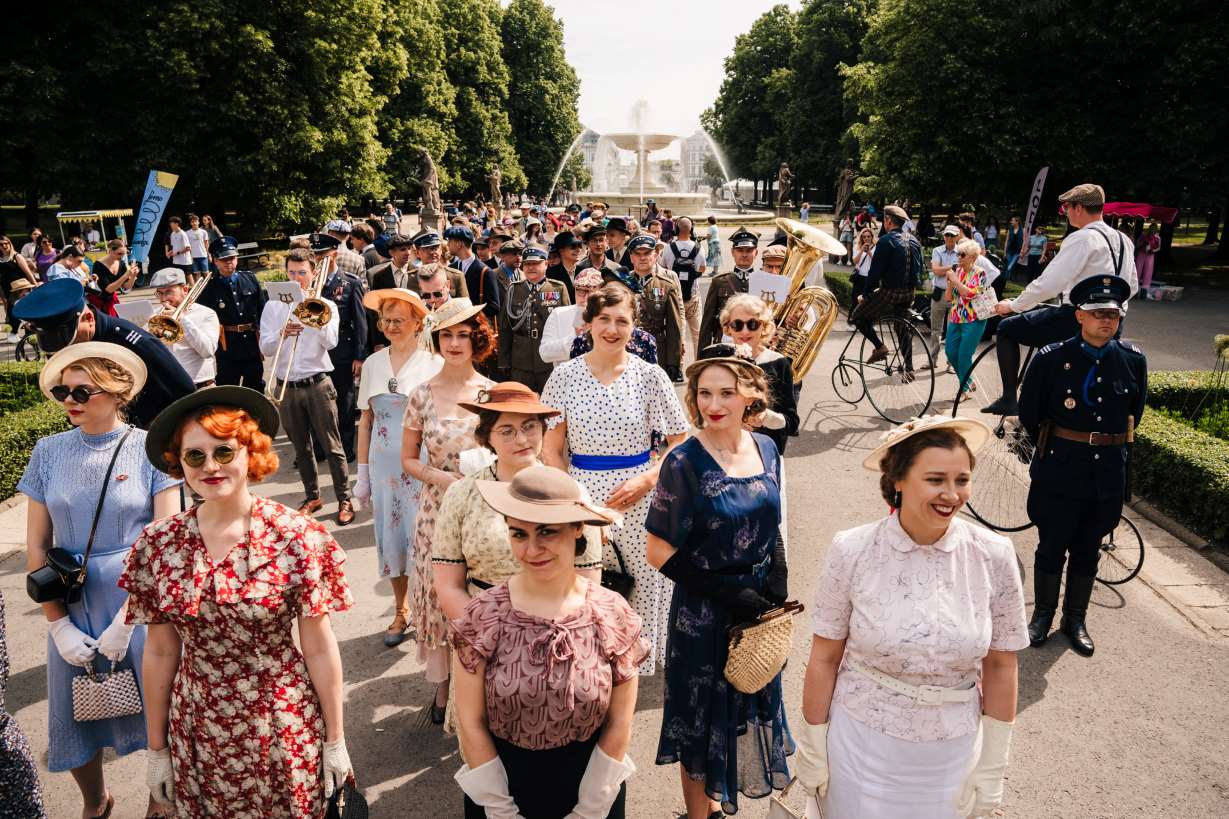
Another event in the immediate vicinity of the reconstructed palaces and tenement houses has already become a regular fixture – the Saxon Garden Festival, whose third edition took place on the last Saturday in May. As in previous editions, this open‑air event, held in Poland’s oldest public park, gave Warsaw residents and visitors to the capital another chance to step back into the interwar period. Festival attractions included people in period clothing, exhibitions from Warsaw’s public offices and pharmacies, rides on penny-farthings, and parades of vintage cars through the Saxon Garden. Throughout the day, the park’s avenues were filled with retro music, culminating, as tradition has it, in an evening dance by the pond at the foot of the Water Tower.
The Saxon Garden Festival in central Warsaw is not the only palace‑themed way to step back in time: the ‘Saski Palace Next Door’ project also enabled visitors to experience interwar Piłsudski Square elsewhere in the city. A mobile reconstruction centre, featuring virtual reality displays and art workshops for children, visited nine districts of the capital in 2024 during outdoor events organised, among other occasions, to mark the beginning and end of summer and to celebrate Children’s Day.
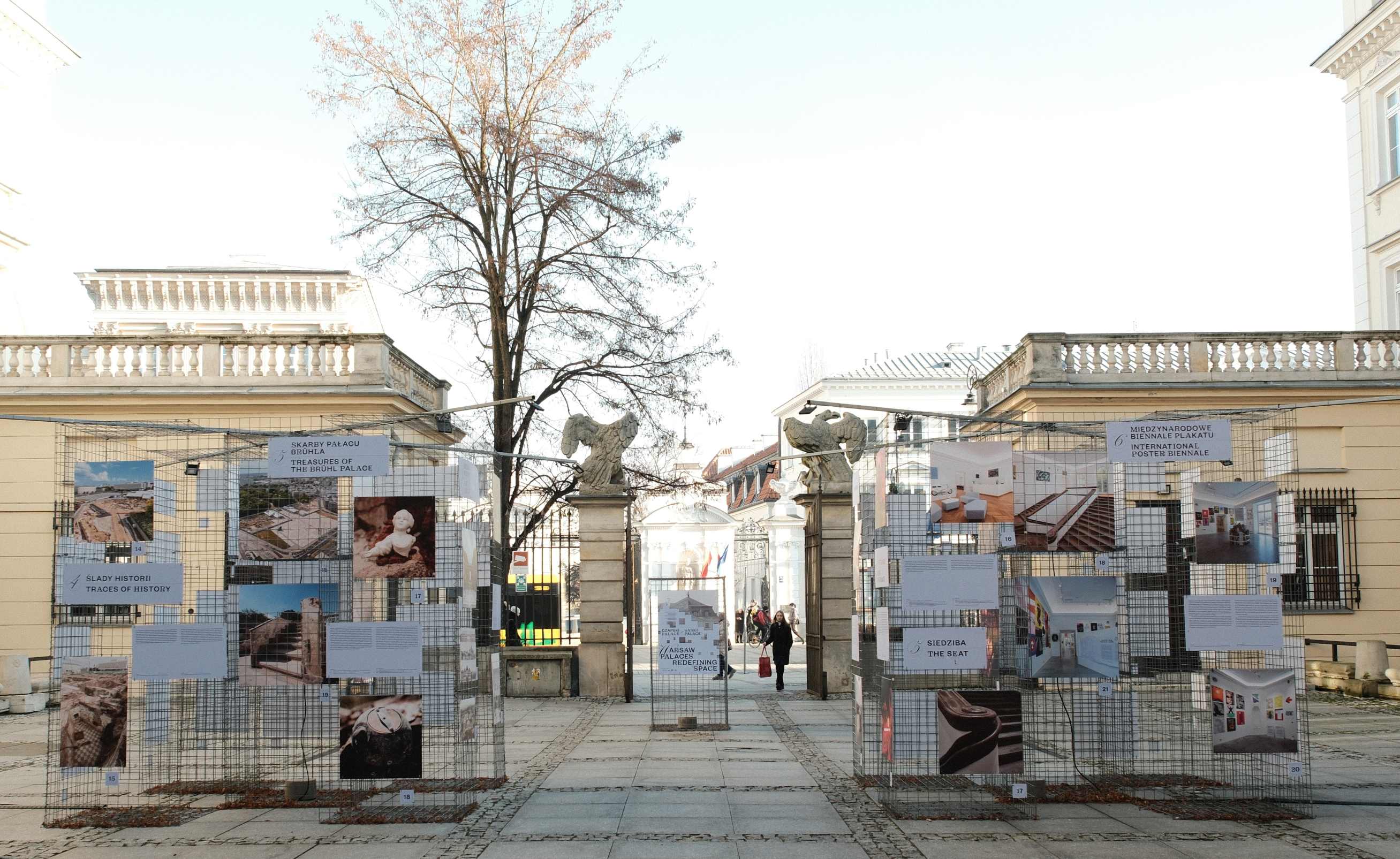
Creative workshops related to the history of the Saski Palace were also part of the programme of last year’s Niepodległa Festival on Krakowskie Przedmieście as part of the latest edition of ‘Saski Palace for Children’. While young visitors rolled up their sleeves to design new Warsaw squares and reimagine the surroundings of the capital’s monuments, and created animated films based on archival photographs, other attractions awaited older festival-goers. They could, for example, join a guided walk along one of two themed routes focusing on the figures of Frederic Chopin and Józef Piłsudski, or visit the exhibition ‘Warsaw Palaces. Redefining Space’ in the courtyard of the Academy of Fine Arts in Warsaw.
Reconstruction of the Saski Palace continues
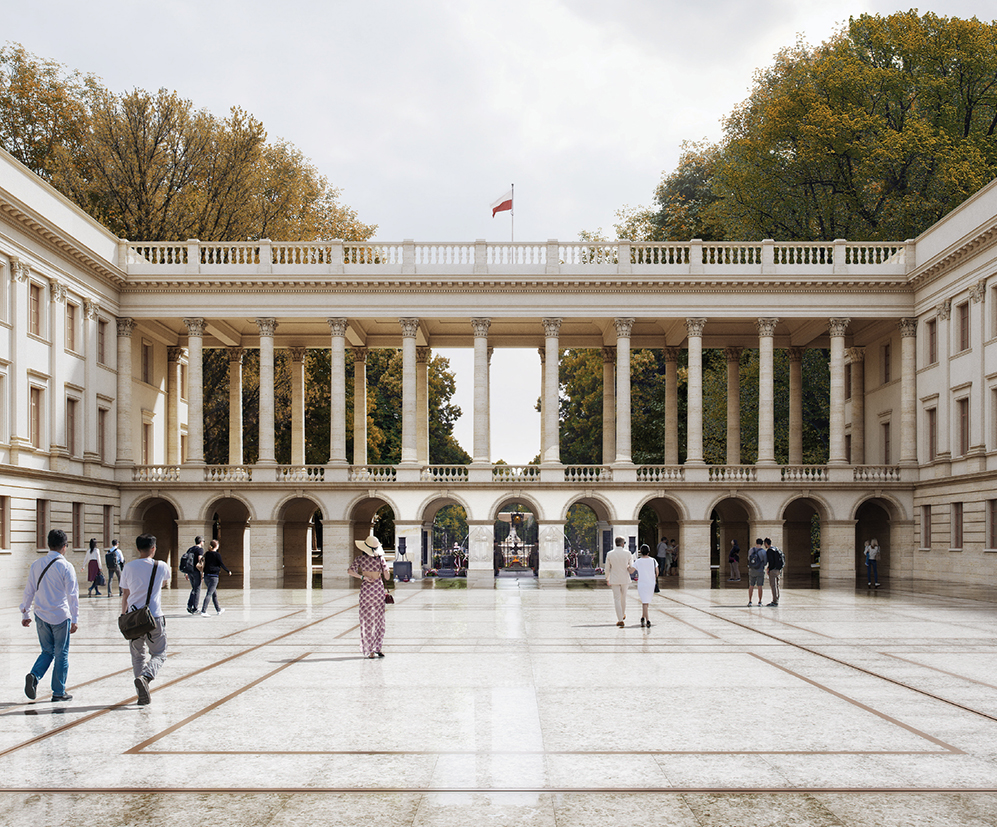
The restoration of the Saski and Brühl Palace complex and the tenement houses on Królewska Street in Warsaw, recreating their architectural form as it appeared on the eve of the Second World War, is a complex, long-term project. It requires historical accuracy of the highest order, while respecting the historic fabric and meeting requirements set by, among others, modern building regulations and the Restoration Act. According to the project programme, the coming months will see intensive work on the architectural design, continued archaeological and conservation investigations, as well as further concept development. The completion of these tasks will in turn enable the team to appoint the main contractor and commence construction works.